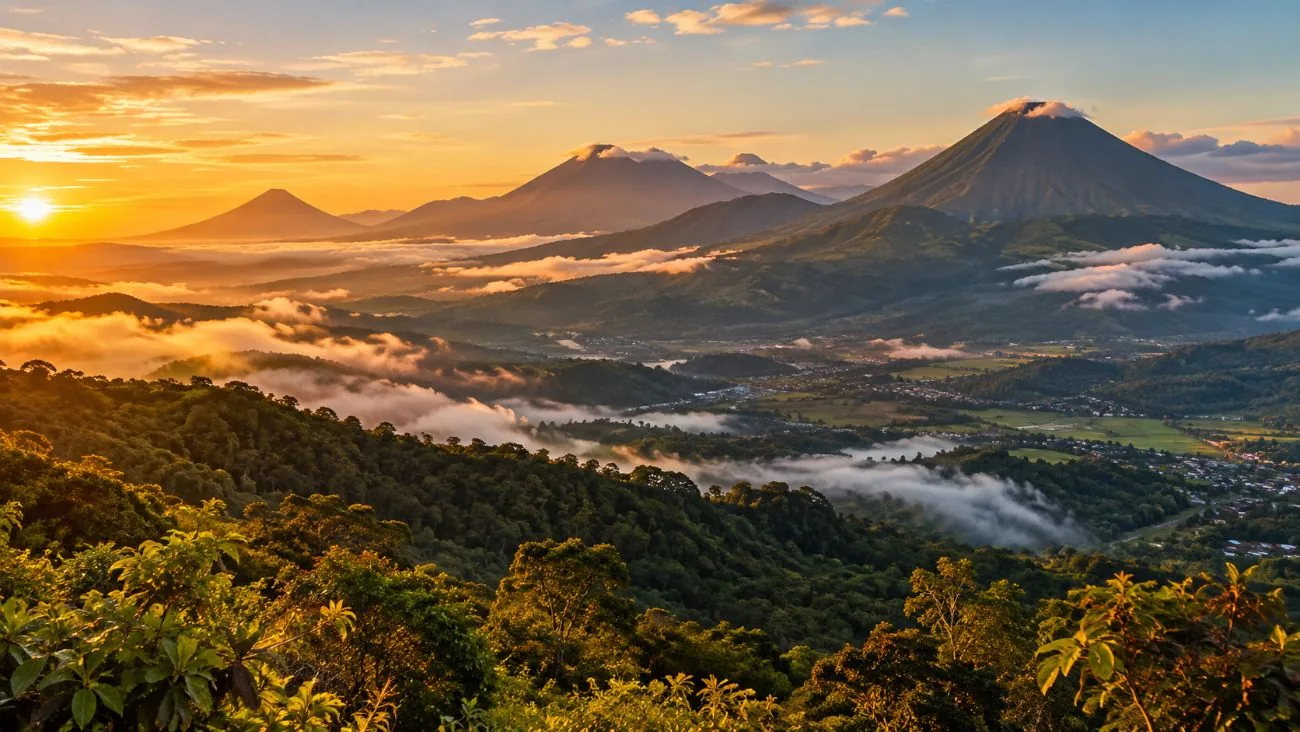
An active volcano an hour and a half north of San José, its crater holding one of the most acidic lakes on Earth.
Climb through cloud forest to the rim, watch turquoise water steam far below, then head down for waterfalls and fresh coffee.
Park open with limits (since 28 Aug 2026): 1,064 visitors a day, 20 minutes at the crater viewpoint, helmets on the open trails. The park can close at short notice. SINAC updates
2026 park rules, checkedLimits, helmets and time slots
Real guest ratingsLive GetYourGuide figures
Free cancellationUp to 24 hours before on most tours here
Secure checkoutBooked and paid on GetYourGuide
Tours
Choose your Poás Volcano tour
In the centre, the day trip with the most reviews: crater, waterfall and coffee farm, park entry included. Either
side, the lowest-priced day out of San José and a private car for two to four that aims for the clear early slot.
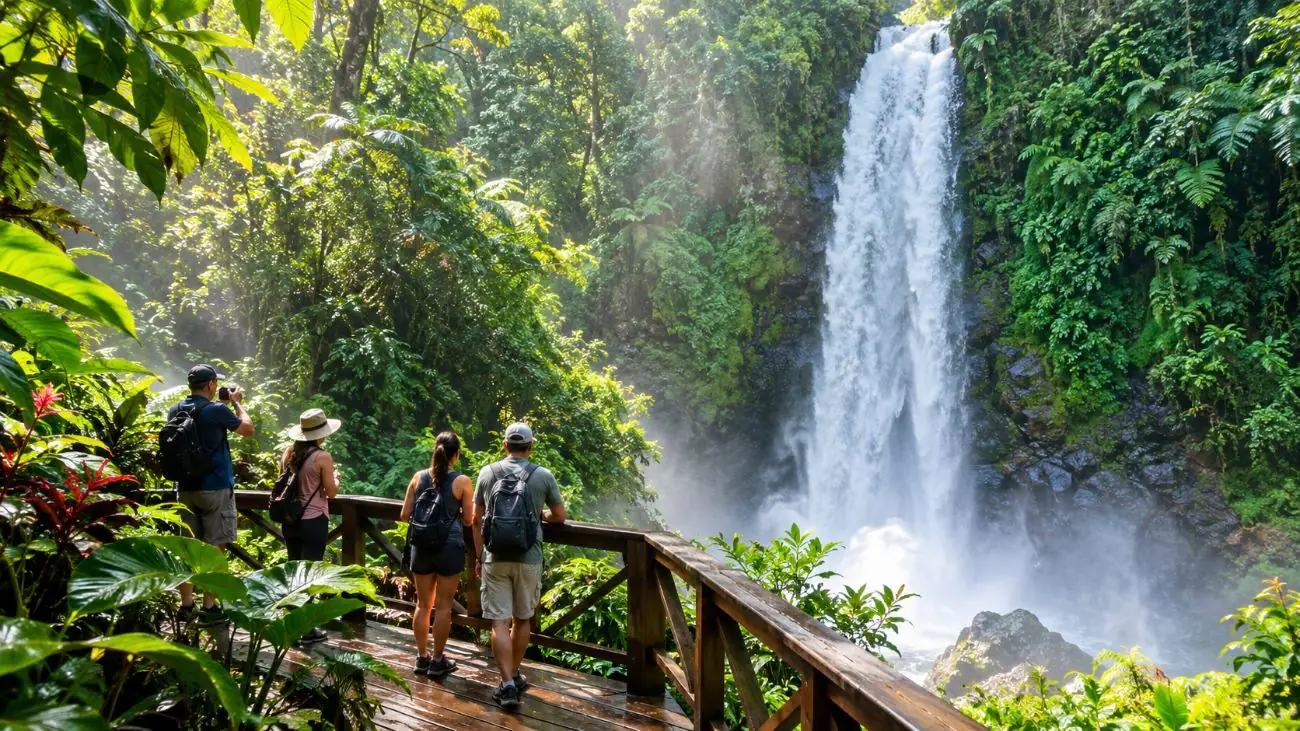
The cheapest full-day volcano tour on GetYourGuide, with the volcano, La Paz Waterfall and a coffee tasting in one loop. Check the inclusions for your date before you book.
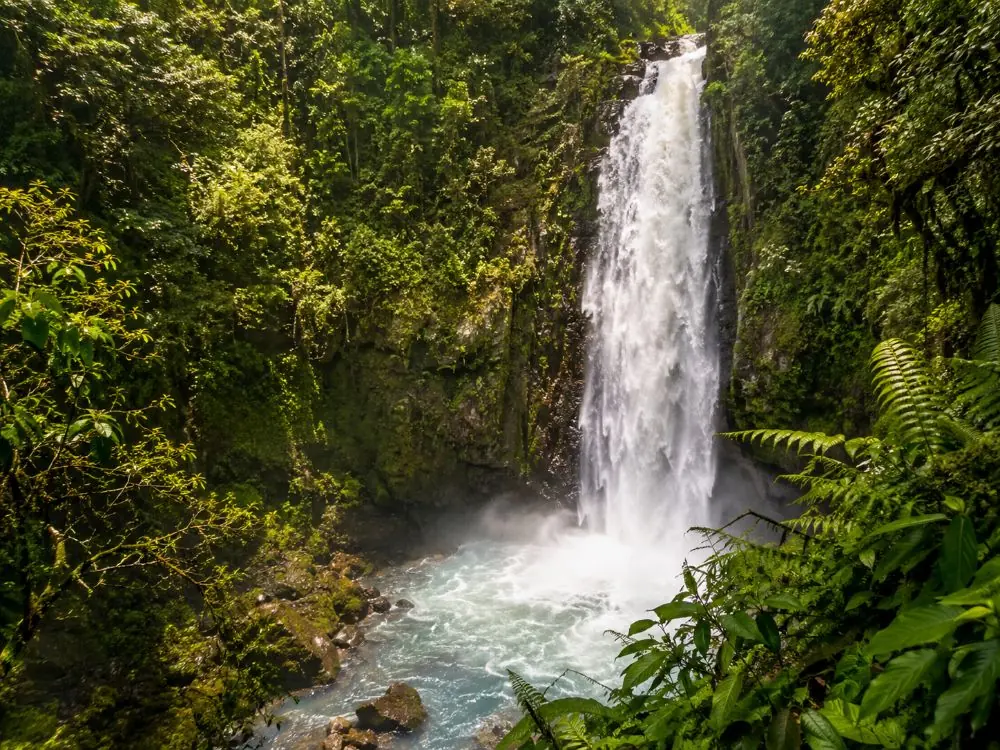
The classic day out of San José: the crater rim, a photo stop at La Paz Waterfall, then lunch and a coffee tour at Hacienda Alsacia. Park entry is booked for you.
Just your group, in an electric car, timed for the early slot when the crater is most often clear. Strawberries at Katy's, then the waterfall overlook.
Every tour gets the same 20 minutes at the viewpoint. What changes is how early you reach the rim,
who you share the van with, and what fills the rest of the day.
Free cancellation up to 24 hours before on most tours; check each listing. If you drive yourself, the park's own ticket costs
US$16.95 for foreign adults on the SINAC website, with no refunds for bad weather.
Before you book
A day trip built around twenty minutes.
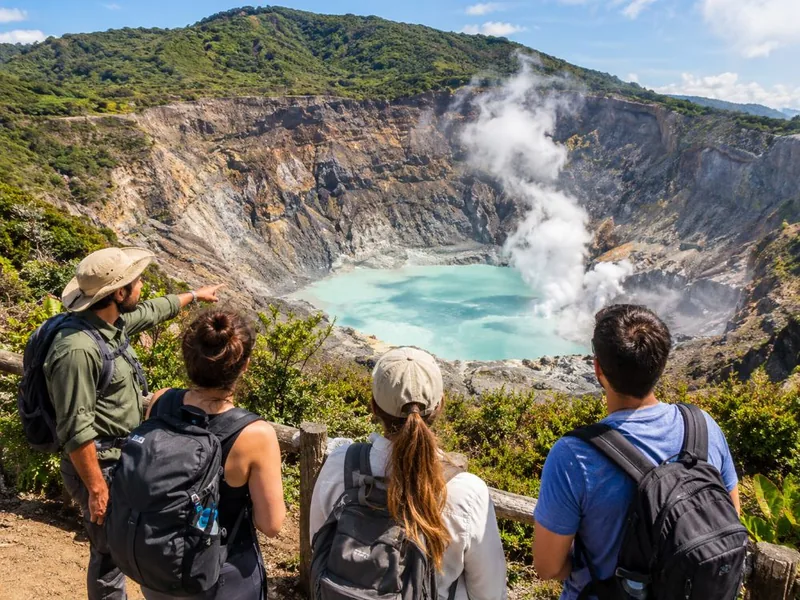
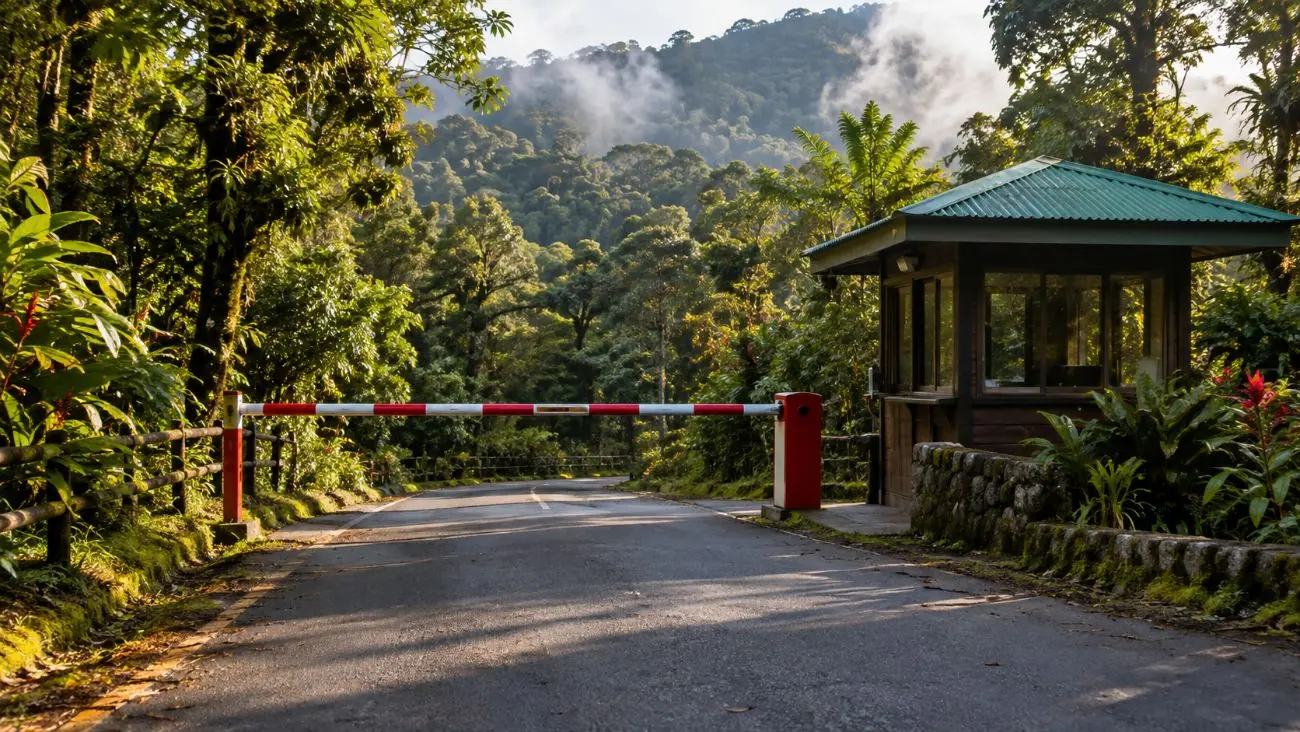
Every Poás visit follows the same shape. You arrive at your booked time, listen to a short safety briefing from the
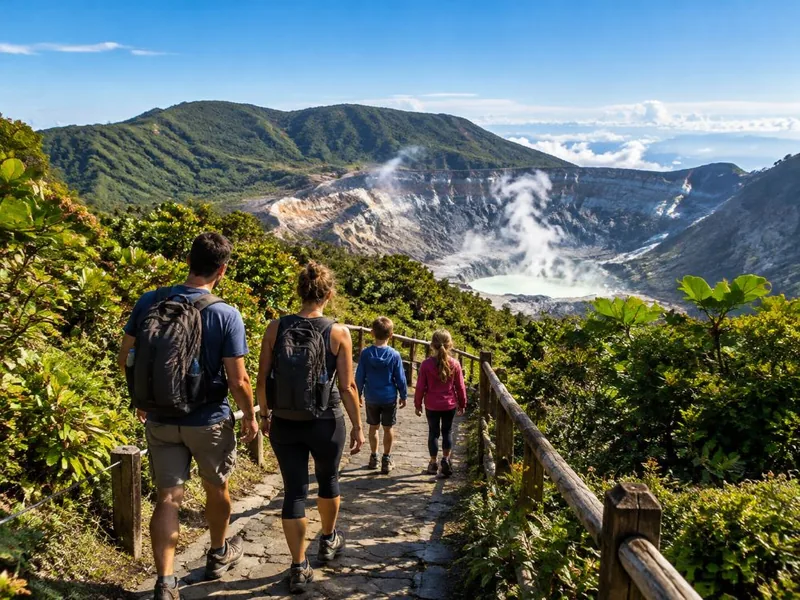
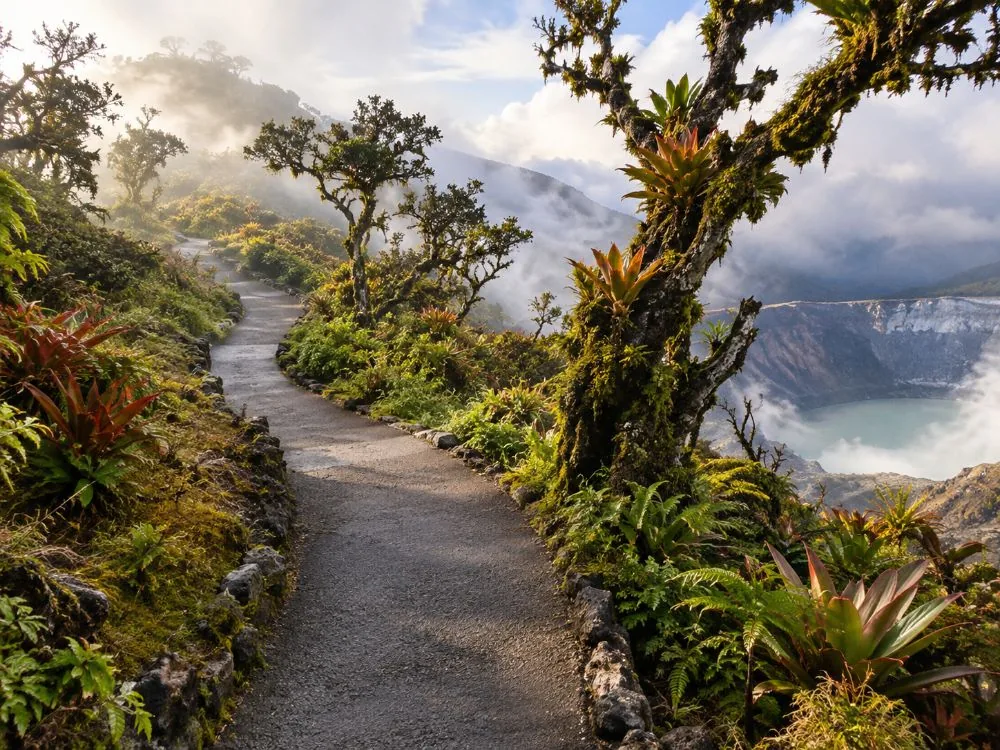
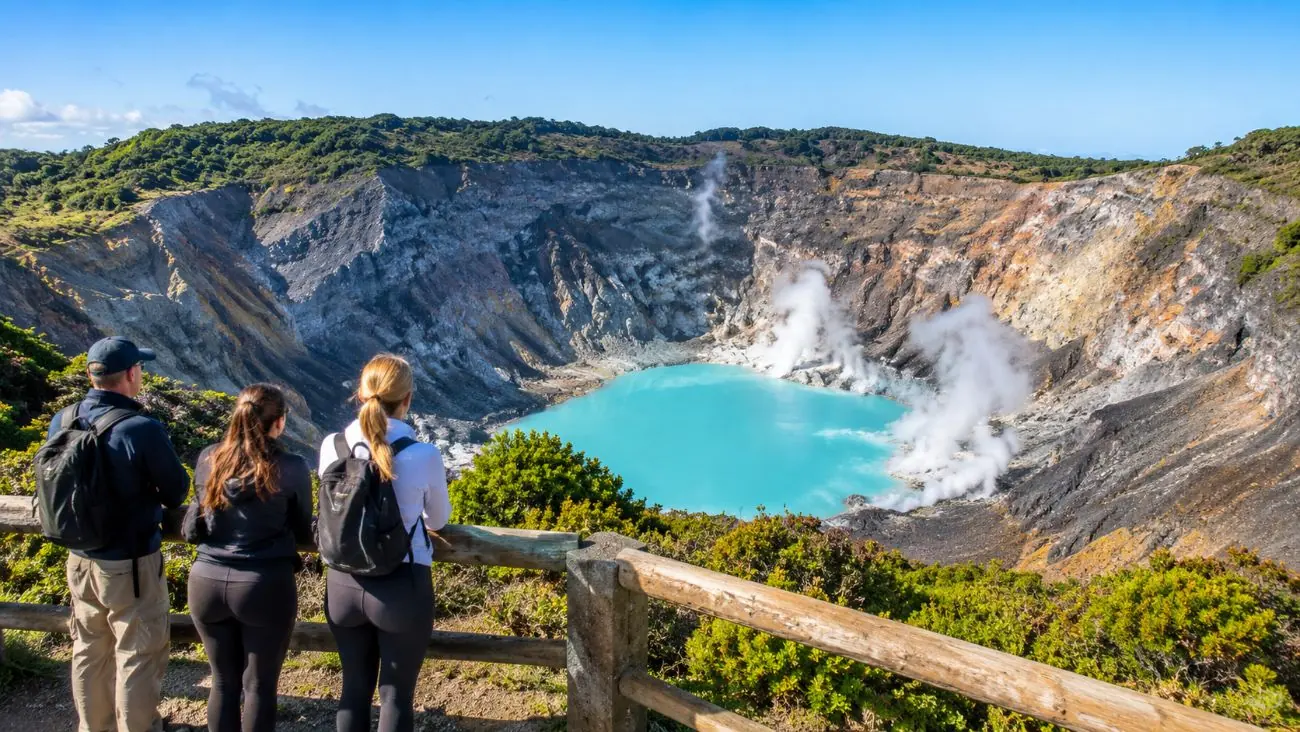
rangers, pull on a helmet and walk about 700 metres up a paved path through stunted cloud forest. At the top is the
viewpoint over the main crater, and since 28 August 2026 a group may stay there for 20 minutes, 56 people at a time.
The rest of the day is what the tours sell: La Paz Waterfall, a coffee farm, strawberries in Poasito, lunch. The part
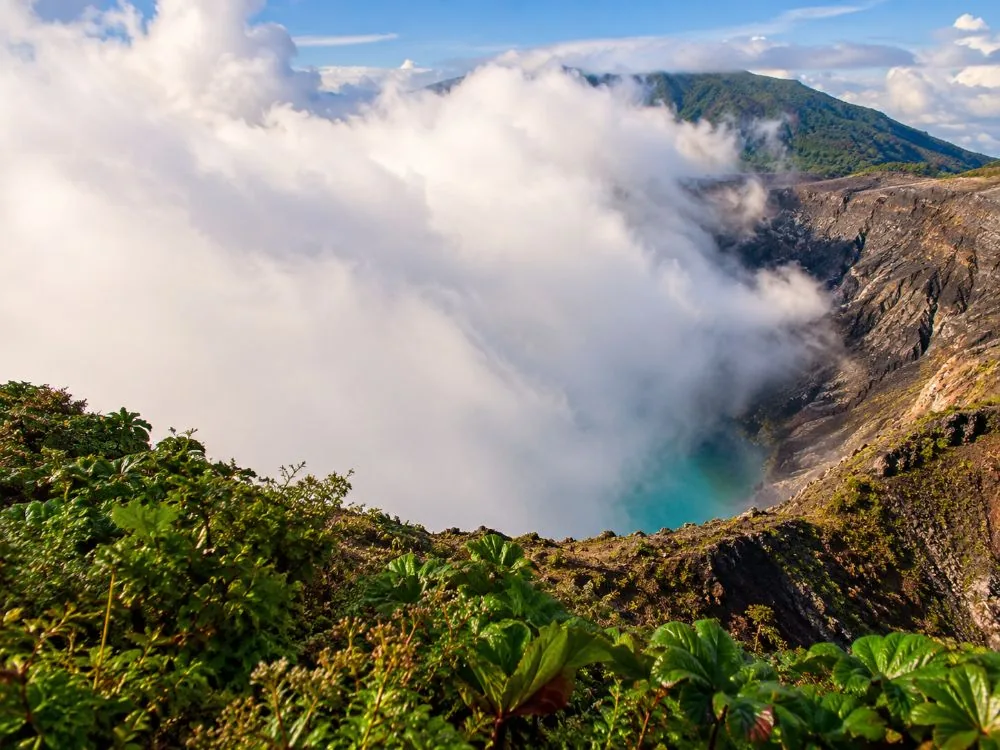
that matters most is the clock. Cloud usually fills the crater by mid-morning, so a tour that reaches the rim at 8:30 sees
far more than one that gets there at 11. Ask what time your slot is, and read the inclusions: several listings still
promise a walk to Laguna Botos, a trail that was not among those named open in the August 2026 rules.
20
Minutes at the crater viewpoint per group, since the August 2026 eruption. The park now
takes 1,064 visitors a day, about half the old limit.
The 2026 rules, tickets, what it costs and what to bring: one tab each.
Daily limit: 1,064 visitors since 28 August 2026, down from 2,052.
At the viewpoint: 56 people at a time, for 20 minutes.
Helmets: required on the main trail and on the Sombrilla de Pobre trail, the two trails open.
Off limits: the crater floor and the ground beside the trails, with fines under Law 10,861.
Hours: 8 a.m. to 4 p.m., last entry at 2 p.m., at the time on your ticket.
Sold only online through SINAC's booking system, for a 30-minute arrival slot.
Each ticket carries a name and passport number and cannot be changed later.
No sales at the gate, and no refunds for fog or rain.
On a tour, the operator books the slot: send your passport details when asked. Full steps in the tickets guide.
Park entry for foreign adults: US$16.95 (US$15 plus 13% tax); children 2 to 12 US$5.65.
Parking at the park: a few dollars, paid on the day.
Resold entry ticket with free cancellation: from $32.
Group day tours from San José: $105 to $189; private: from $183 per person.
A warm, windproof layer: it is often 10 to 18°C at the top.
A rain jacket in any season, and closed shoes.
Your passport (or a copy, as some operators accept): names are checked against the ticket.
A cloth for misted lenses. No drones: they are not allowed.
From San JoséAbout 1.5 hNorth through Alajuela, Fraijanes and Poasito, on paved roads.
From the airportAbout 1 hJuan Santamaría airport is on the way, in Alajuela.
AltitudeAbout 2,700 mCool, windy and often wet, even in the dry season.
At the crater20 minutesThe real number to plan around, on every tour.
Clear viewsBefore 10 a.m.Cloud often fills the crater by late morning.
Refund24 hoursFree cancellation on most tours here. Park tickets do not refund.
Where it is
Getting to the crater
An hour and a half north of San José
Parque Nacional Volcán Poás, Alajuela province, Costa Rica
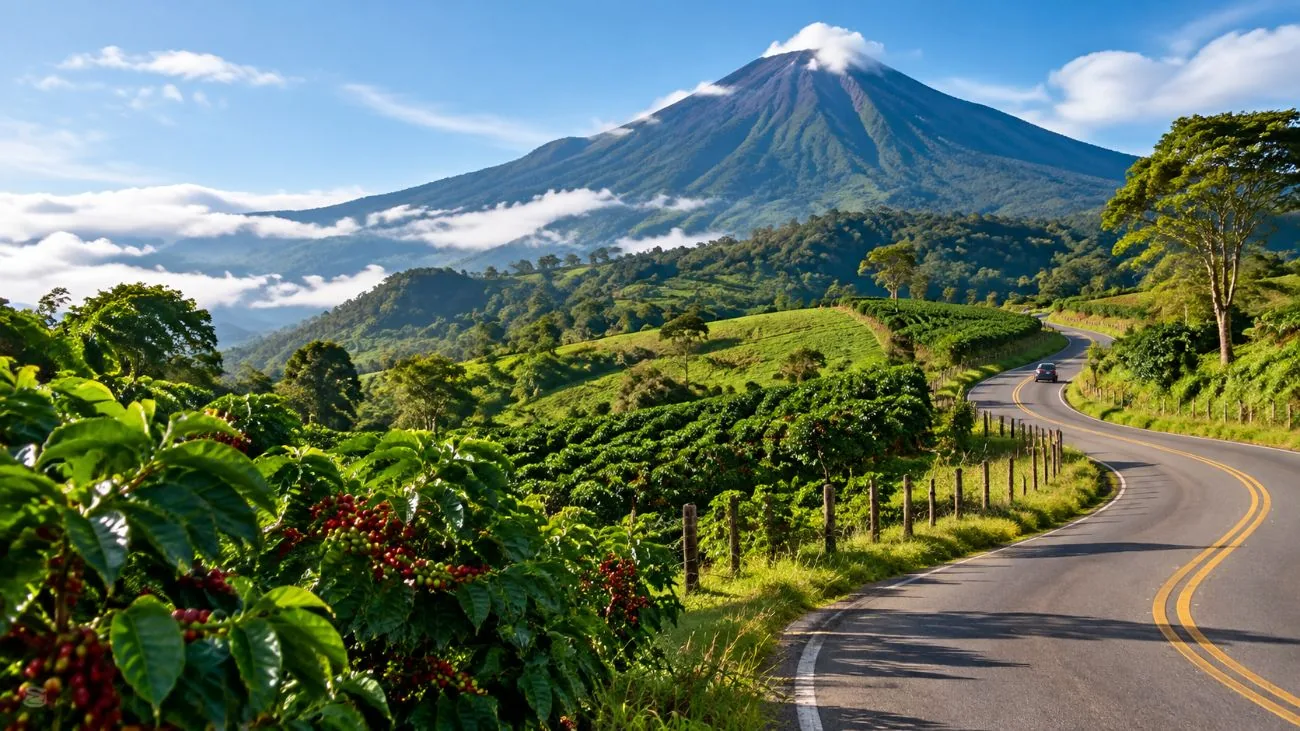
The park sits at the top of a long climb from Alajuela, past coffee farms, dairy pastures and the strawberry stands
of Poasito. Every tour on this site includes the ride. If you drive, fill up in Alajuela (there is no fuel near the
entrance), and stay on the main paved route: in January 2026 officials warned drivers off the old back road, which
suits only four-wheel drives.
Driving up yourself? Make the morning a pair. Do the crater at the first slot, when it is most often clear, then come down for two hours at a small family coffee farm on the same slopes, a slower visit than the big estates on the day tours.
Poás is the easiest active volcano in Costa Rica to see up close, and one of the moodiest. Here is how to get
the view rather than the cloud.
What you are looking at
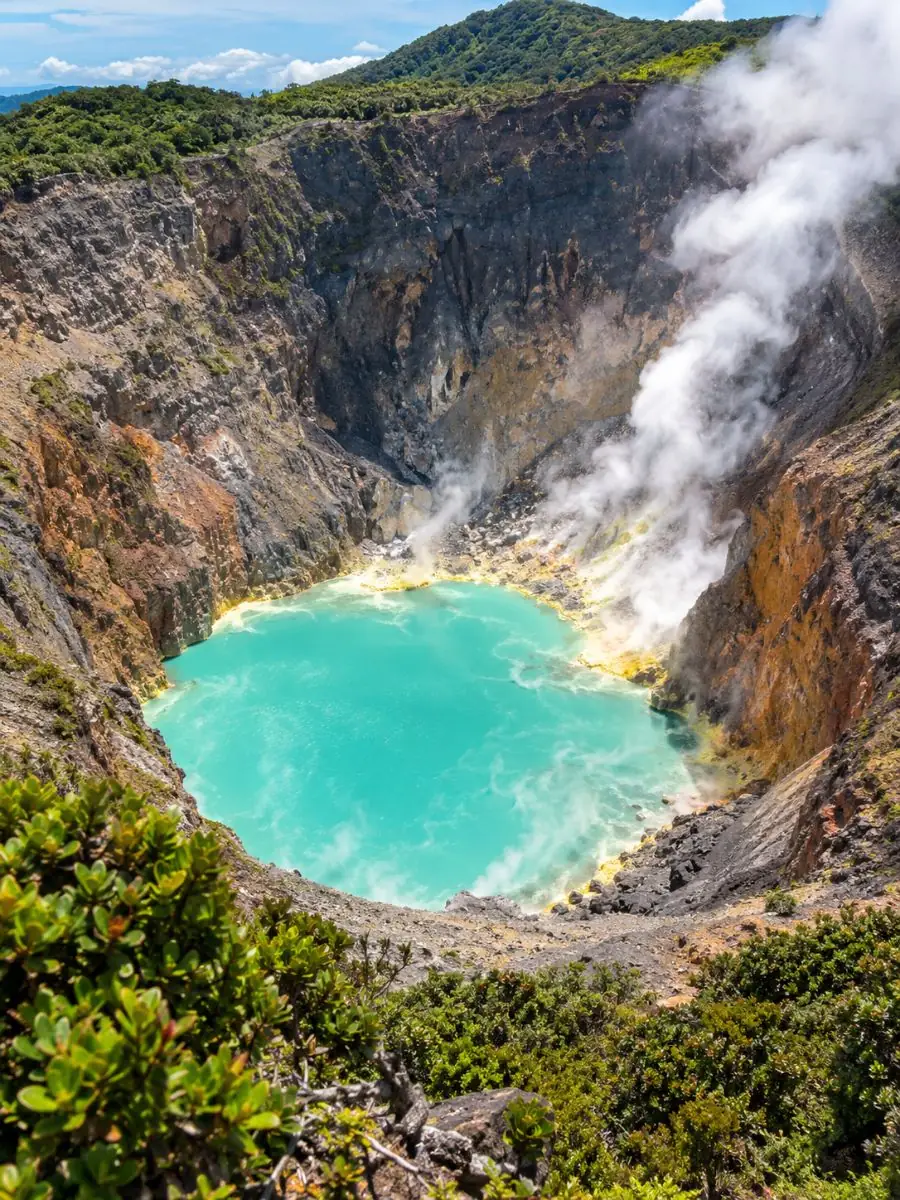
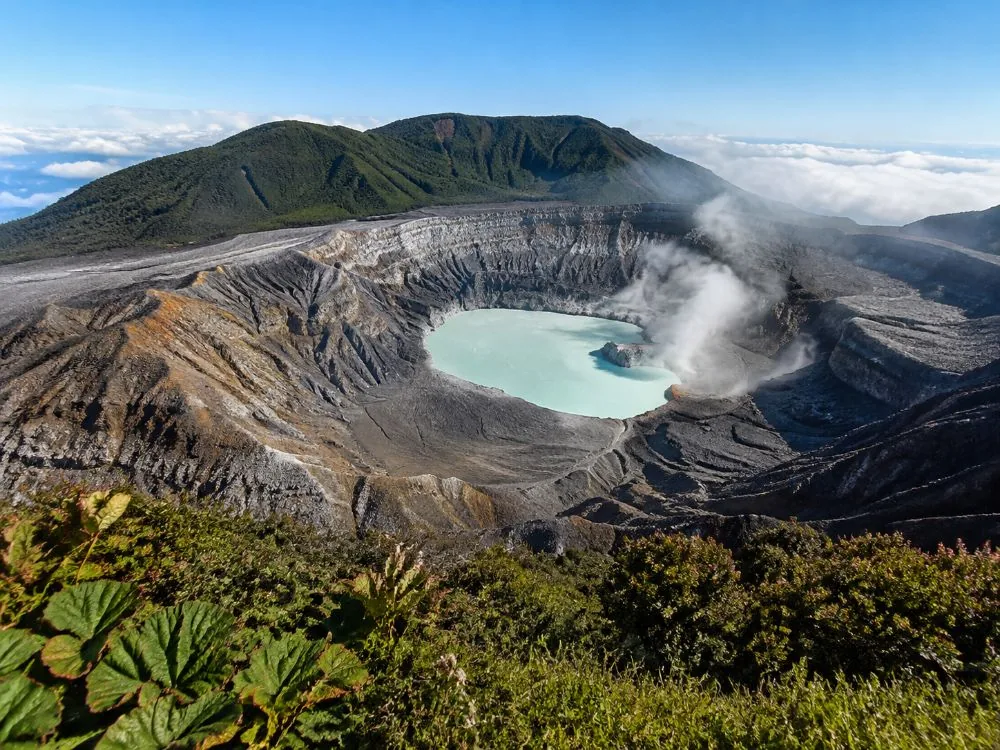
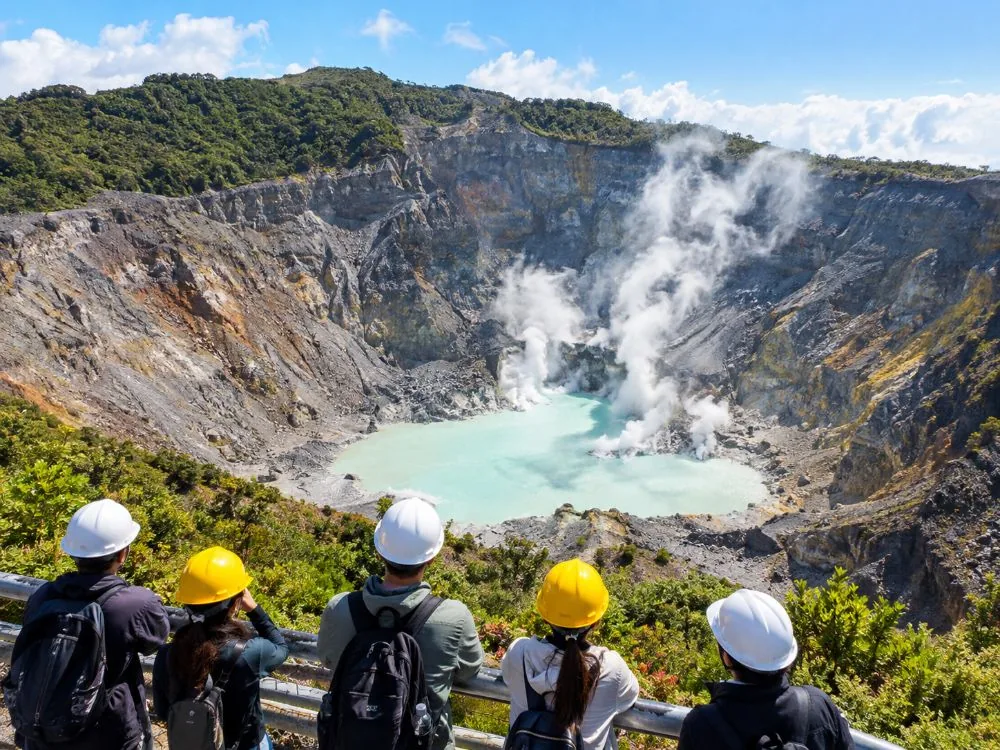
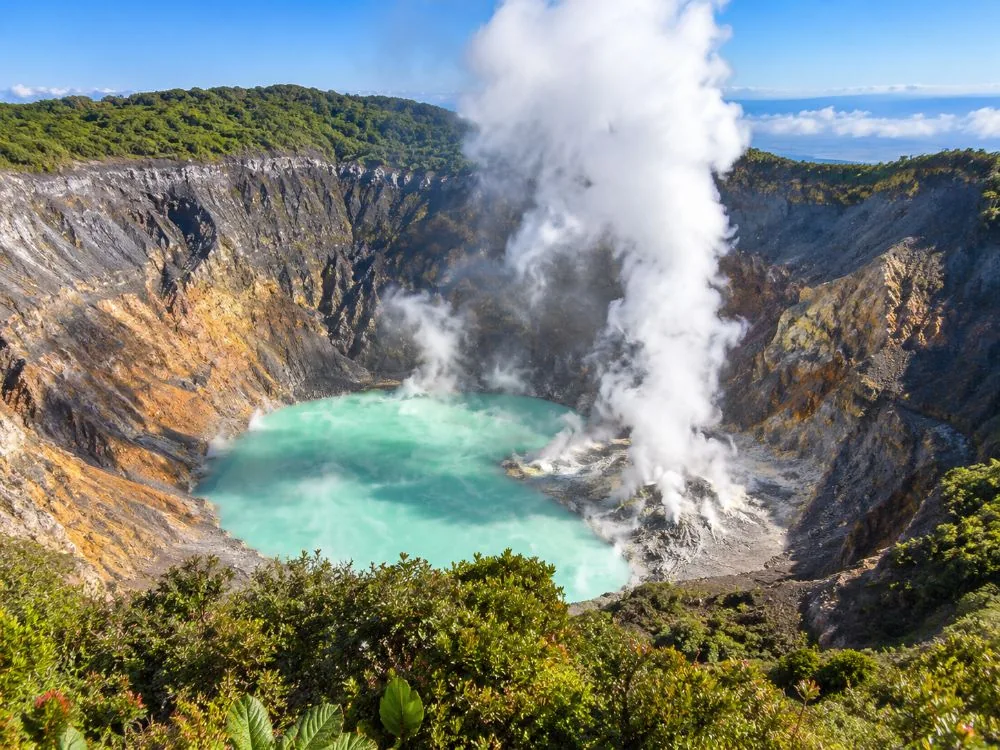
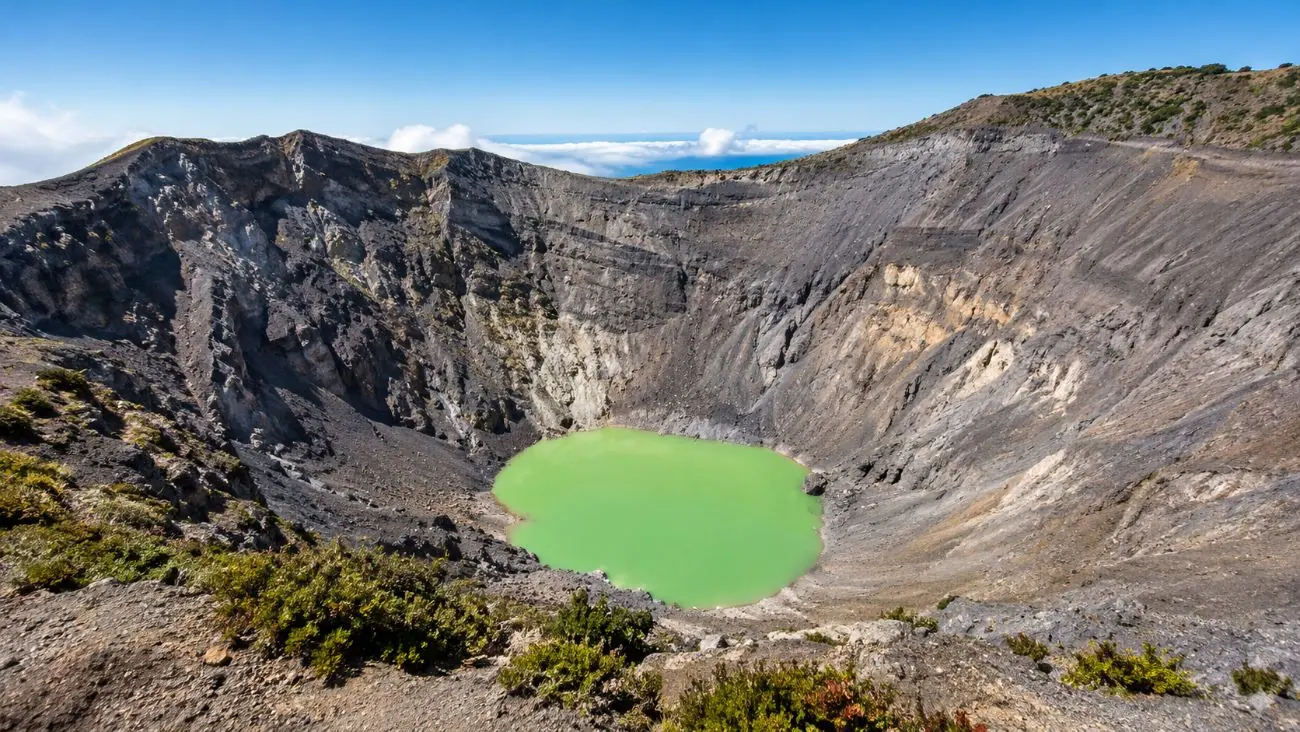
Poás is a stratovolcano in the Cordillera Central, its summit about 2,700 metres up. The main crater is roughly 1.5 km
across and about 300 m deep, and at the bottom sits Laguna Caliente, a warm lake so acidic that its pH sometimes drops close
to zero, with liquid sulfur on the bed. The colour shifts with the activity: milky turquoise, grey, sometimes green. Plumes
of gas drift up from vents on the crater floor, and the smell of sulfur reaches the viewpoint on some days.
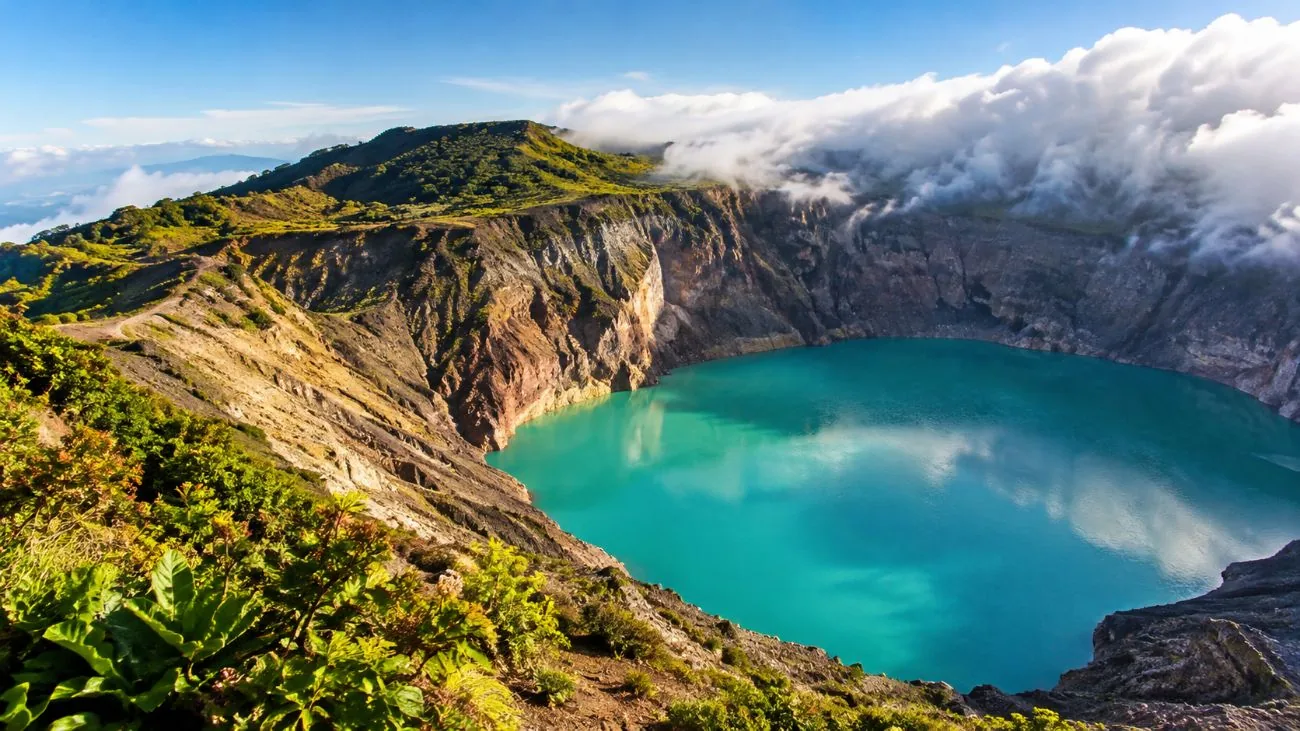
South of it lies a second, quieter crater filled by Laguna Botos, a cold green lake in the cloud forest. The trail to it
was closed as a precaution in 2024 and 2025, and the August 2026 rules named only the main trail and Sombrilla de Pobre as open.
Gas and steam rise from vents on the crater floor most days.
A volcano that keeps moving
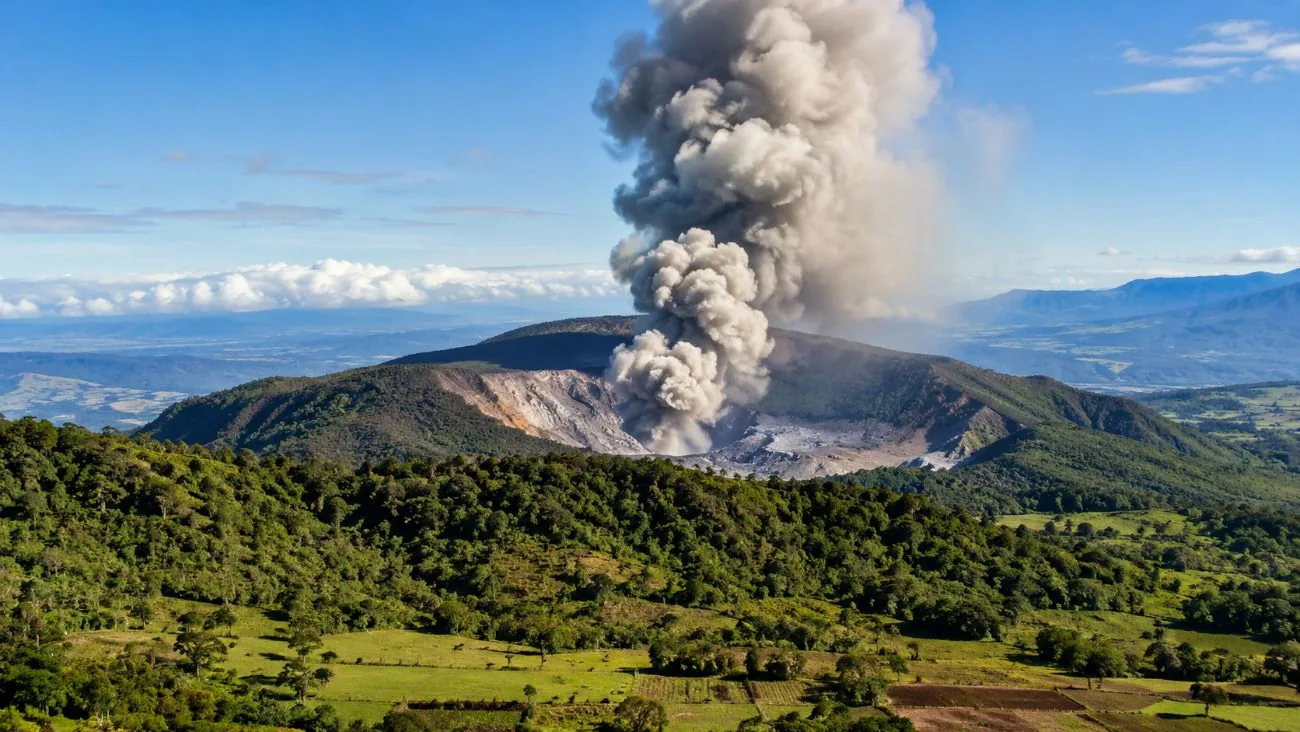
Poás has erupted about 40 times since 1828. The April 2017 eruptions blew apart the lava dome and emptied the lake, and the
park stayed shut for 17 months. In 2025 it closed again from late March, with ash rising more than 4 km in April, and reopened
on 30 July. In 2026 a bridge on the access road closed the park in January, a crater wall slumped into the lake in April, and an
eruption on 27 August threw material about 600 metres. That last one brought the current limits. None of this makes a visit
reckless: rangers and OVSICORI watch the volcano closely and close the park when they need to. It does mean your date can change.
The honest small print: a Poás tour is a full day built around 20 minutes at a railing, and those
20 minutes can be white with cloud. Pick the tour by the time it reaches the rim, then by what else is in the day.
Each of our tour pages says where the volcano falls in the schedule.
Tour, ticket or your own car?
Driving yourself is the cheapest way and the most flexible: buy the SINAC ticket for the first slot, park, walk up, and
you are back in Alajuela before most tours arrive. You need a car, a passport number for the booking, and a plan B if the
park closes. A tour adds hotel pickup, a guide who explains what is happening in the crater, and the second half of the
day, usually La Paz Waterfall and a coffee farm. The private run on this site is the one that most clearly chases the early
slot. Our tour comparison goes through each one.
The road up passes dairy farms, strawberry fields and coffee.
Timing it
Mornings win. The cloud builds on the volcano's slopes as the day warms and usually fills the crater by 10:30 or 11:00.
The dry season, December to April, gives the most clear days; the green season can still deliver a clean view at 8 a.m.
Weekdays are quieter than weekends. Whatever the month, keep a second date in mind: if fog wins, or the park closes for
activity, you will want another go.
Straight answers to what people ask most about visiting Poás Volcano.
Can you visit Poás Volcano now?
Yes. The park is open, under tighter rules since 28 August 2026: 1,064 visitors a day, 20 minutes at the crater viewpoint, helmets on the open trails and entry only at your booked time. Rangers can still close it at short notice when gas or eruptions pick up. Our status post tracks the changes.
Is Poás Volcano worth it?
Yes, if you go early. On a clear morning you look straight down into a crater about 1.5 km wide with a steaming turquoise acid lake. By late morning cloud often fills it and you see white. There is no flowing lava. More in is Poás worth it.
How much does it cost to go to Poás Volcano?
Foreign adults pay US$15 plus 13% tax (US$16.95) on the SINAC website, children 2 to 12 US$5.65, plus parking at the park. Day tours from San José with entry included run from $105 to $189 per person on GetYourGuide. See the tickets guide.
Do you need a reservation for Poás Volcano?
Yes. Tickets are sold online only, through SINAC, for a set time slot, in your name with your passport number. There are no sales at the gate and no refunds for fog. Tours book the slot for you.
How difficult is the hike to Poás Volcano?
Easy. A paved path of about 700 metres climbs gently from the parking area to the viewpoint, 15 to 20 minutes on foot. The altitude, close to 2,700 metres, leaves some people short of breath, so walk slowly.
How much time do you need at Poás Volcano?
About an hour inside the park: the safety briefing, the walk up, your 20 minutes at the viewpoint and the walk down. Add 1.5 hours each way from San José. Most tours pair it with a waterfall or a coffee farm to fill the day.
Is Poás Volcano still active?
Very. Poás has erupted about 40 times since 1828, closed the park for 17 months after April 2017, threw ash more than 4 km high in April 2025 and erupted again on 27 August 2026. Read the latest eruptions.
How do I get to Poás Volcano?
By car, about 1.5 hours north of San José through Alajuela and Poasito, or 1 hour from the airport. The public bus runs weekends only and arrives too late for the clear early slots. A tour includes pickup. Details in how to get there.
Which volcano is better, Poás or Irazú?
Poás has the more dramatic crater and lake and is closer to the airport. Irazú is higher (3,432 m), feels more like a moonscape and on clear mornings can show both coasts. See Poás vs Irazú.
How high is Poás Volcano?
The summit is about 2,700 metres (roughly 8,850 feet) above sea level. Expect 10 to 18°C at the top, wind and drizzle, so bring a warm layer even in the dry season.
What is the best time to visit Poás Volcano?
Book the first slots, 8:00 or 8:30 a.m. Cloud usually rolls in by 10:30 or 11:00. The dry season, December to April, gives the best odds. See the best time to visit.
Can I cancel a Poás Volcano tour?
Most tours on this site cancel for a full refund up to 24 hours before; each listing shows its terms. The park itself does not refund its own tickets for bad weather; after an emergency closure SINAC reschedules by email.
Ready to book
Book early, see the crater.
Park entry and hotel pickup included on the day trips, and free cancellation up to 24 hours before on most tours.


 Lowest price
★ 4.41 dayCheck terms