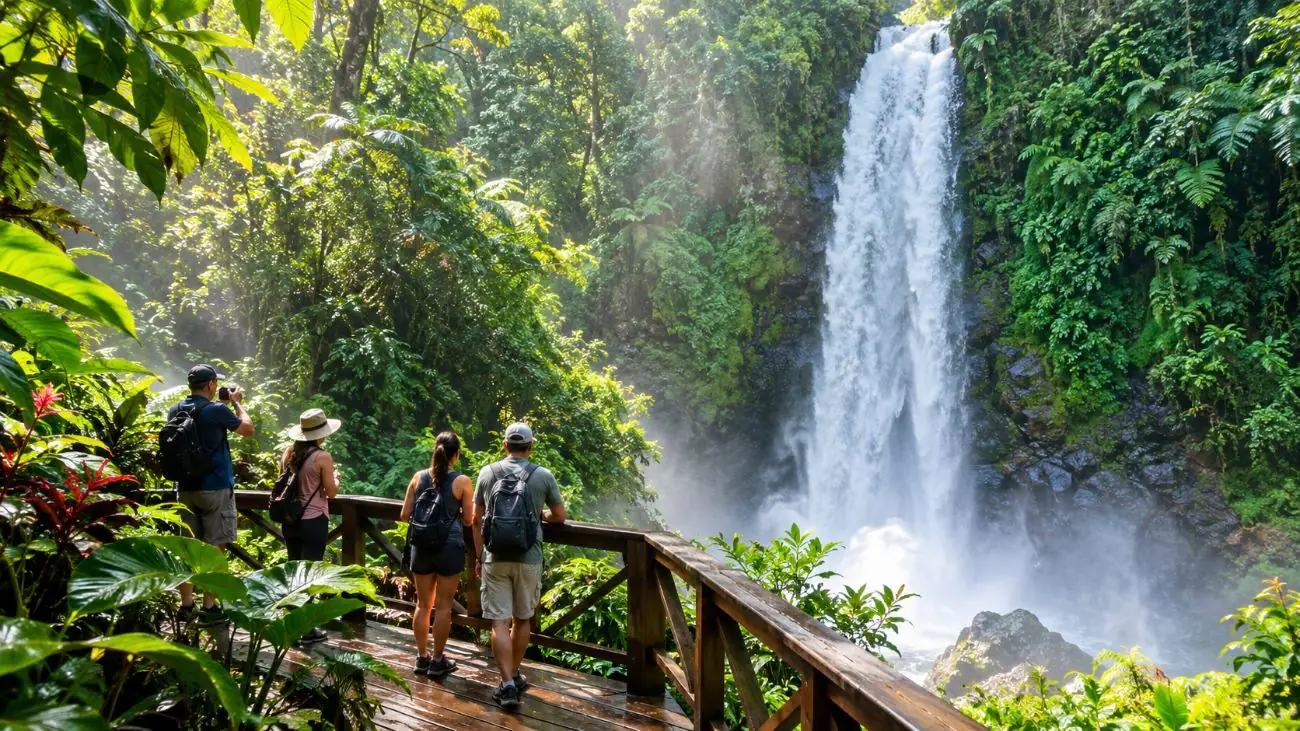
Booking choice: The volcano, waterfall and coffee day trip, from $139 per person. Check dates Tour details
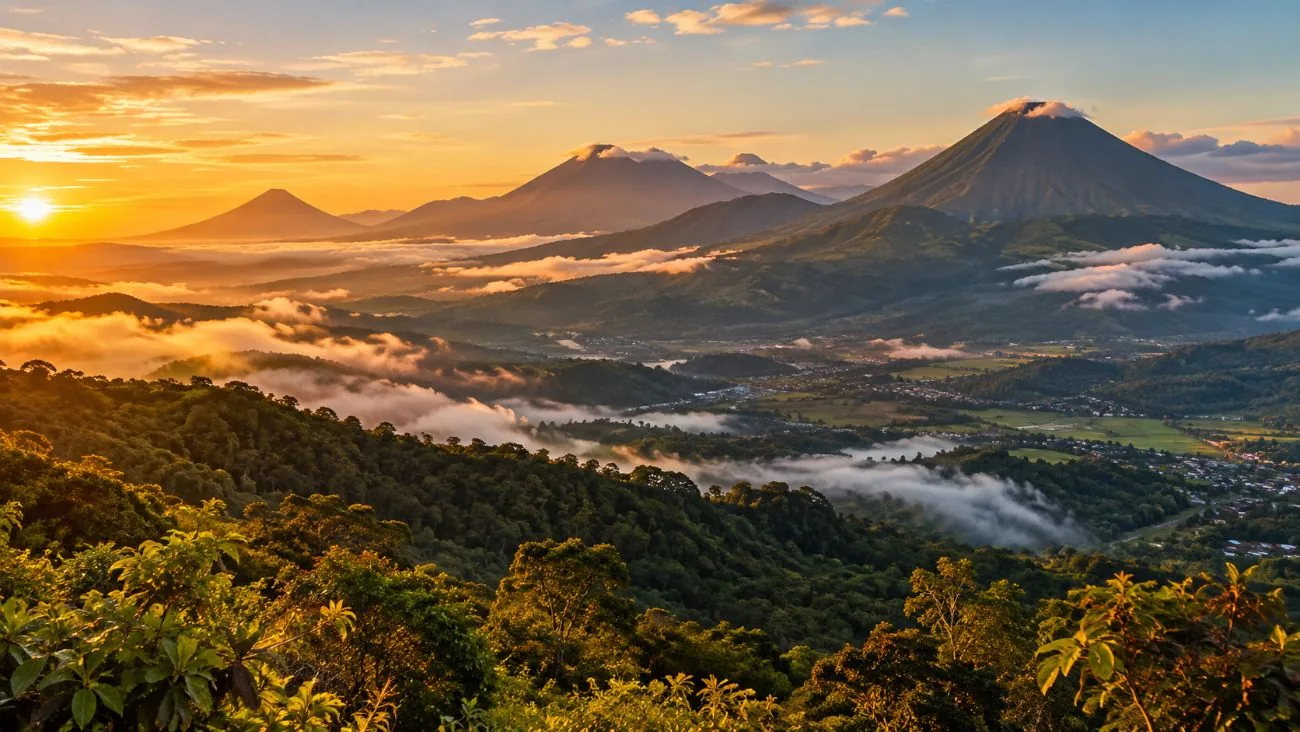
Costa Rica has five volcanoes usually described as active: Poás, Rincón de la Vieja, Turrialba, Irazú and Arenal. In 2025 and 2026 two of them did most of the erupting, Poás and Rincón de la Vieja.
This post covers what scientists can and can't predict, which volcanoes were busy, which parks you can visit, and how the world's "top" volcanoes are ranked.
The quick answer
No volcano can be predicted to erupt in a given year; forecasts work in days or weeks, and the best-known long-range forecast, for Axial Seamount off Oregon, has already slipped once. In Costa Rica, Poás and Rincón de la Vieja were the most active in 2025-2026. The world's top volcano depends on the measure: Mauna Loa is the largest active volcano, Ojos del Salado the highest, Stromboli the longest erupting.
What volcano is predicted to erupt in 2026?
None, in the sense of a reliable date. The best-known forecast, for Axial Seamount off Oregon, was moved from 2025 to 2026. Volcanoes already erupting, such as Kīlauea and Poás, will keep doing so.
Scientists forecast eruptions from short-term signals: earthquakes, ground swelling, gas. That gives hours to weeks of warning at a well-watched volcano, not a calendar year. The exception that made headlines is Axial Seamount, an underwater volcano off Oregon. William Chadwick of Oregon State University forecast it would erupt before the end of 2025. It didn't, and his December 2025 analysis pointed to 2026 instead (Science News).
He is frank about the limits: "Every time we try to anticipate when we're going to get up to that threshold, something changes and we're wrong." We found no report of Axial erupting by late October 2026.
The safer answer is the list of volcanoes already erupting. Kīlauea in Hawaii has been in an episodic summit eruption since 23 December 2024, and its 55th lava-fountain episode began on 17 October 2026 (USGS). Poás erupted on 27 August 2026.
Which Costa Rican volcanoes were most active in 2025 and 2026?
Poás and Rincón de la Vieja. Turrialba, Irazú and Arenal were quiet by comparison.
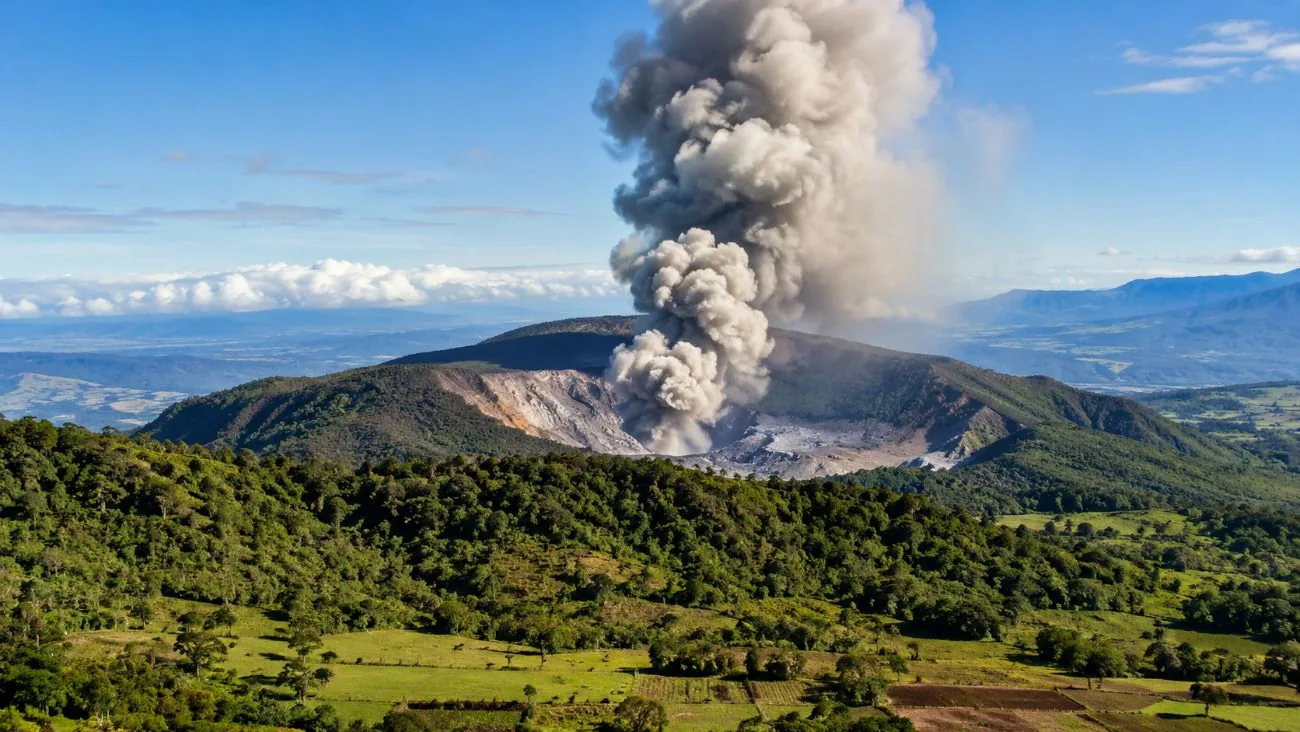
Poás had its strongest phase since 2017 in 2025 and several eruptions in 2026 (the full record). Rincón de la Vieja, in Guanacaste, was the other busy one: OVSICORI logged 48 eruptions in July 2026 and more than 100 across July and August. A blast with a plume of about 2,000 m was called its most energetic of the year, and the CNE put five nearby districts on a green alert on 2 September 2026 (Tico Times).
Turrialba, east of San José, had a long ash phase that grounded flights at the main airport in the 2010s; its last listed eruption is from October 2019. Irazú's big eruption ran from 1963 to 1965. Arenal, the textbook cone near La Fortuna, has been quiet since 2010.
| Volcano | Height | Recent activity | Visiting in 2026 |
|---|---|---|---|
| Poás | About 2,700 m | Eruptions 2025 and 2026, OVSICORI level 2 | Open with limits; crater view |
| Rincón de la Vieja | 1,916 m | 100+ eruptions July to August 2026, level 3 | Park open; active crater off limits |
| Turrialba | 3,340 m | Last listed eruption October 2019 | Reopened 26 August 2026 after rain closure |
| Irazú | 3,432 m | Big eruption 1963 to 1965 | Open; closes 3:30 p.m. |
| Arenal | 1,670 m | Quiet since 2010 | Trails and cone views, no crater |
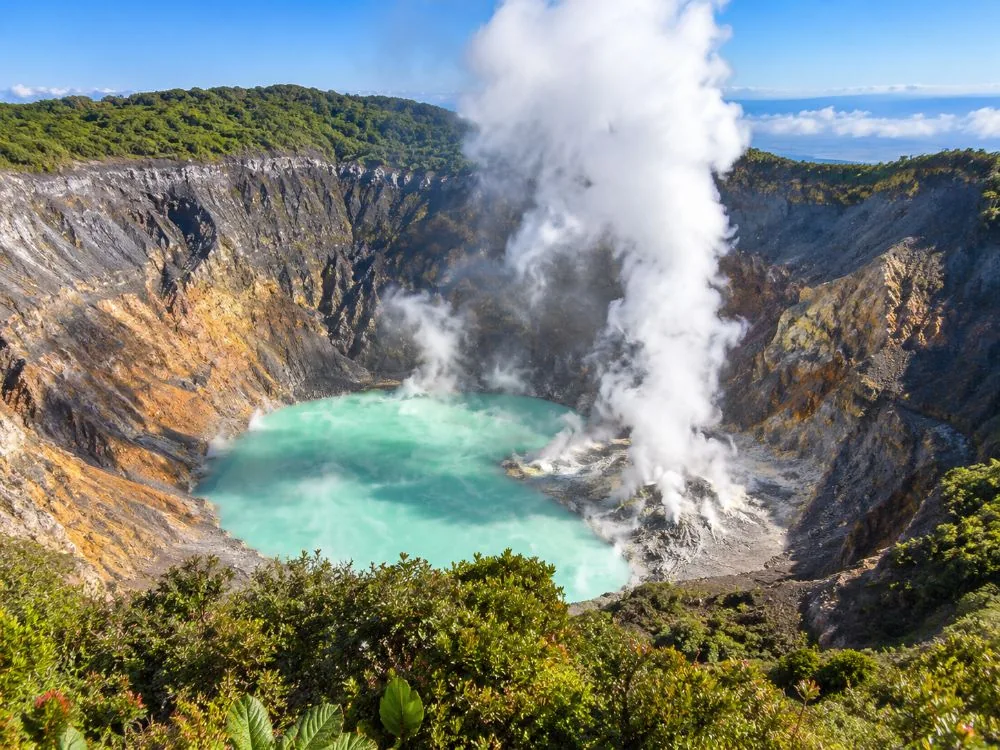
Can you visit Rincón de la Vieja and Turrialba in 2026?
Yes to both parks, with limits. Rincón de la Vieja's active crater is closed to visitors; Turrialba reopened on 26 August 2026 after a rain closure.
The September 2026 green alert at Rincón de la Vieja did not close the national park, the Tico Times reported, but the active crater is not open, and SINAC can restrict access at short notice. The CNE asked people to keep away from rivers that can carry volcanic mudflows. Check SINAC before you drive to Guanacaste.
Turrialba Volcano National Park and nearby Guayabo National Monument closed on 18 August 2026 for heavy rain and landslide risk and reopened on 26 August (Tico Times). That closure was about the weather, not the volcano.
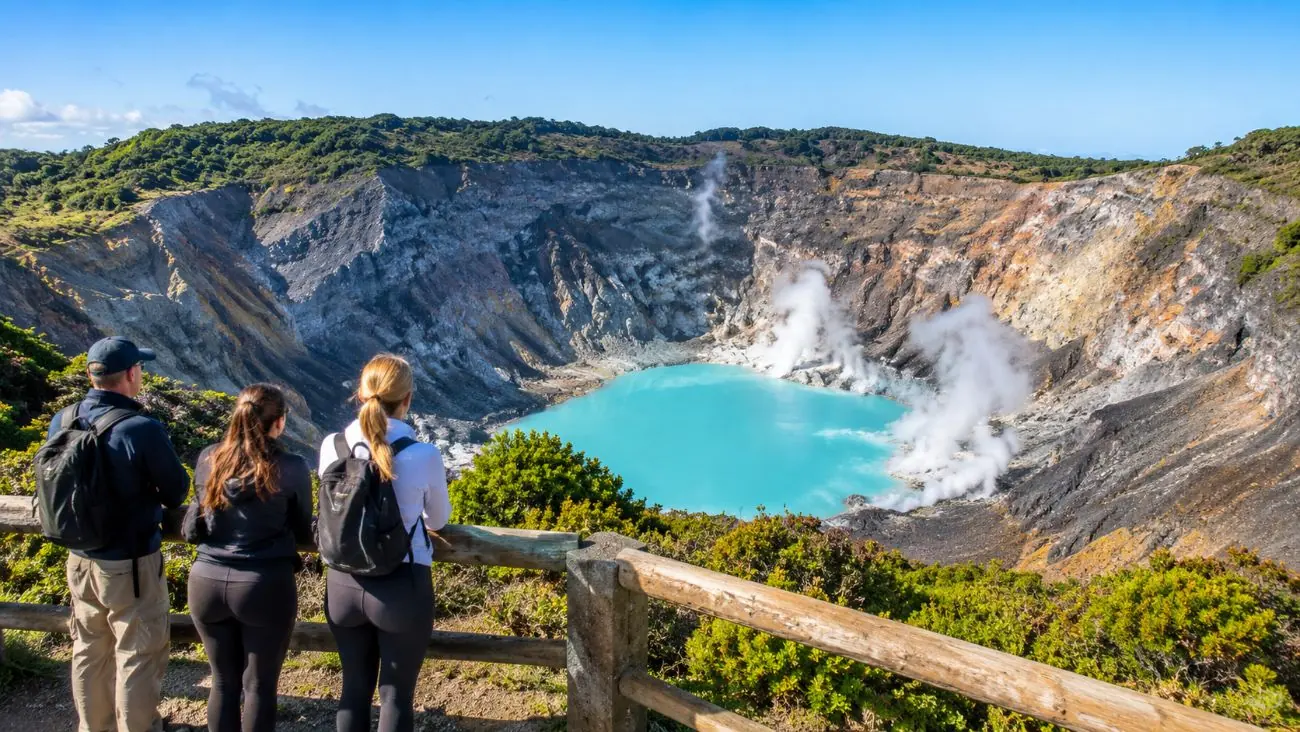
For a crater you can stand above, Poás is still the simplest of the three: about 1.5 hours from San José, a paved 700 m path and a view straight into an acid lake.
The crater first, then La Paz Waterfall and lunch at a coffee farm, with pickup in San José.
Check dates for the volcano, waterfall and coffee day tripWhat is the top 1 volcano in the world?
It depends on the measure. Mauna Loa is the largest active volcano, Ojos del Salado the highest, and Stromboli has erupted the longest. Kīlauea and Etna are among the most active.
There is no official world ranking. Lists usually pick one of these:
- Largest: Mauna Loa, Hawaii. The USGS calls it "the largest active volcano on our planet"; it last erupted in late 2022 (USGS).
- Highest active: Ojos del Salado, 6,893 m, on the Chile and Argentina border (Guinness World Records).
- Longest erupting: Stromboli, Italy, in eruption since at least the 7th century BC, the Lighthouse of the Mediterranean (Guinness World Records).
- Most active: Kīlauea, with 55 fountain episodes since December 2024, and Etna in Sicily, often called Europe's most active volcano.
Poás makes no world list for size or height. It does hold a rarer title: its lake is one of the most acidic on Earth.
| Measure | Volcano | Where |
|---|---|---|
| Largest active | Mauna Loa | Hawaii, USA |
| Highest active | Ojos del Salado, 6,893 m | Chile and Argentina |
| Longest continuous eruption | Stromboli | Italy |
| Most active (recent) | Kīlauea | Hawaii, USA |
| Most acidic crater lake (among) | Poás | Costa Rica |
What is the best volcano to see in Costa Rica?
Poás, for most visitors: the easiest look into an active crater, an hour and a half from San José. Irazú is higher and wider; Arenal is the perfect cone but has no crater view.
Poás gives you the most for the effort. A 15 to 20-minute walk, 20 minutes at the rail and, on a clear morning, an acid lake steaming 300 m below. The catch is the cloud, which usually fills the crater by 10:30 or 11:00, and the limits since 28 August 2026. Book the earliest slot or a tour that gets there first.
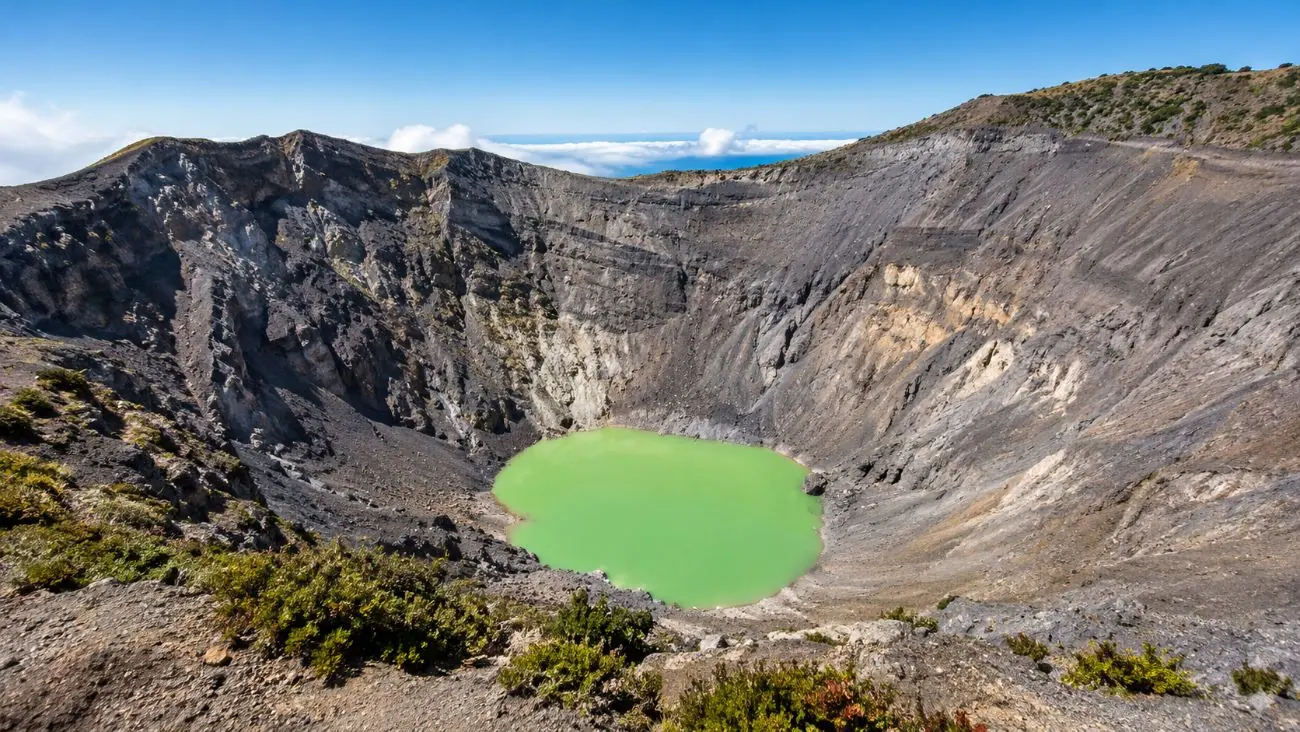
Irazú, the highest at 3,432 m, has a grey moonscape and, on rare mornings, views to both coasts. It closes at 3:30 p.m. Our Poás vs Irazú guide compares the two. Arenal is a sight from La Fortuna, with lava-field trails and hot springs, not a crater visit.
Combine Poás with La Paz Waterfall and a coffee farm and you have a full day; the waterfall tours guide lines them up.
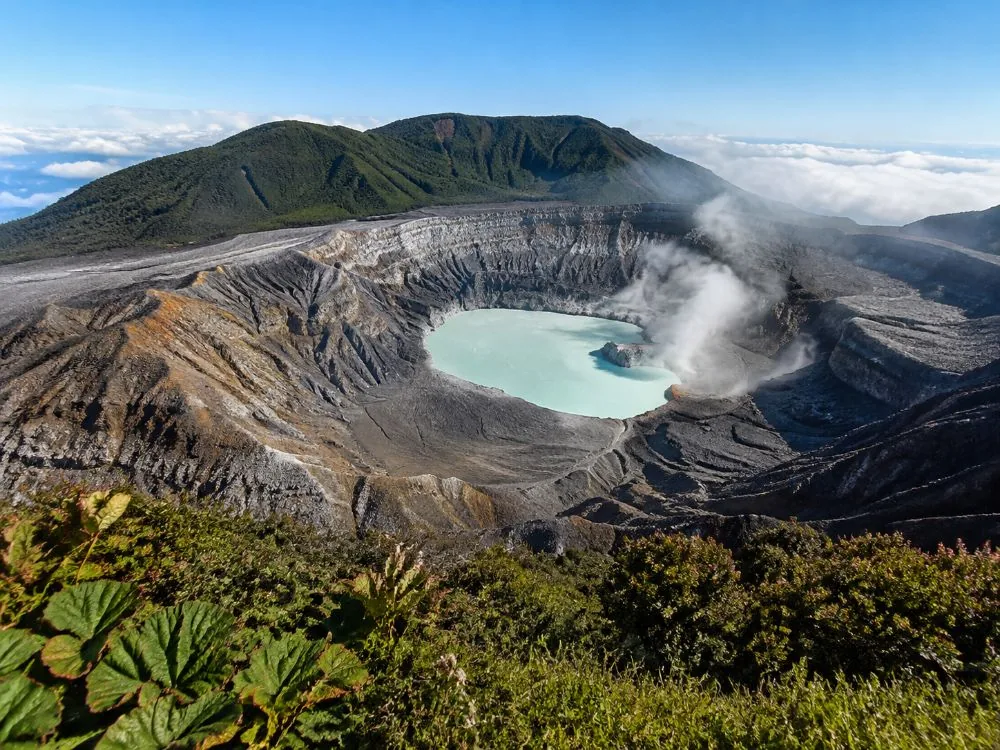
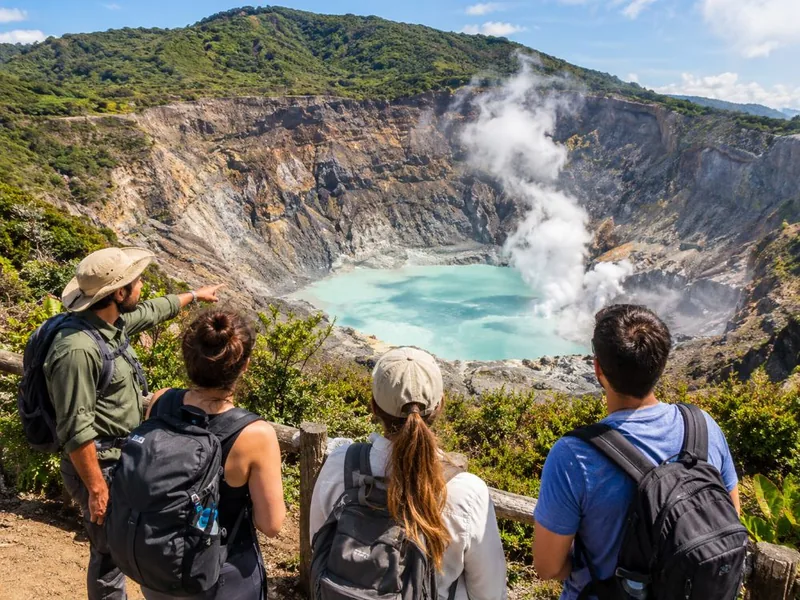
The most-reviewed Poás day: hotel pickup, the crater early, La Paz Waterfall and lunch at Hacienda Alsacia.
Explore the volcano, waterfall and coffee day trip Tour detailsFrequently asked questions
Which volcano will erupt next in Costa Rica?
Nobody can name a date. Poás and Rincón de la Vieja erupted often in 2025 and 2026 and are the likeliest to keep doing so; OVSICORI publishes their levels.
How many active volcanoes does Costa Rica have?
Five are usually called active: Poás, Rincón de la Vieja, Turrialba, Irazú and Arenal. Only Poás and Rincón de la Vieja erupted often in 2025 and 2026.
Is Arenal Volcano still erupting?
No. Arenal's long eruptive phase ended in 2010. You can hike its old lava flows and see the cone from La Fortuna, but there is no crater to look into.
Ready to book
Choose your tour
Free cancellation up to 24 hours before on most options. Prices are from-prices in USD and move with the season.
Poás Volcano, Waterfall & Coffee Farm Day Trip
- Hotel pickup and drop-off in San José
- Live guide in English and Spanish
- Poás Volcano National Park entry fee

Private Poás Volcano & La Paz Waterfall
- Private guide and electric vehicle, 2 to 4 people
- Hotel pickup within the Central Valley (GAM)
- Park entrance and parking fees