Booking choice: The private Poás tour, from $183 per person. Check dates Tour details
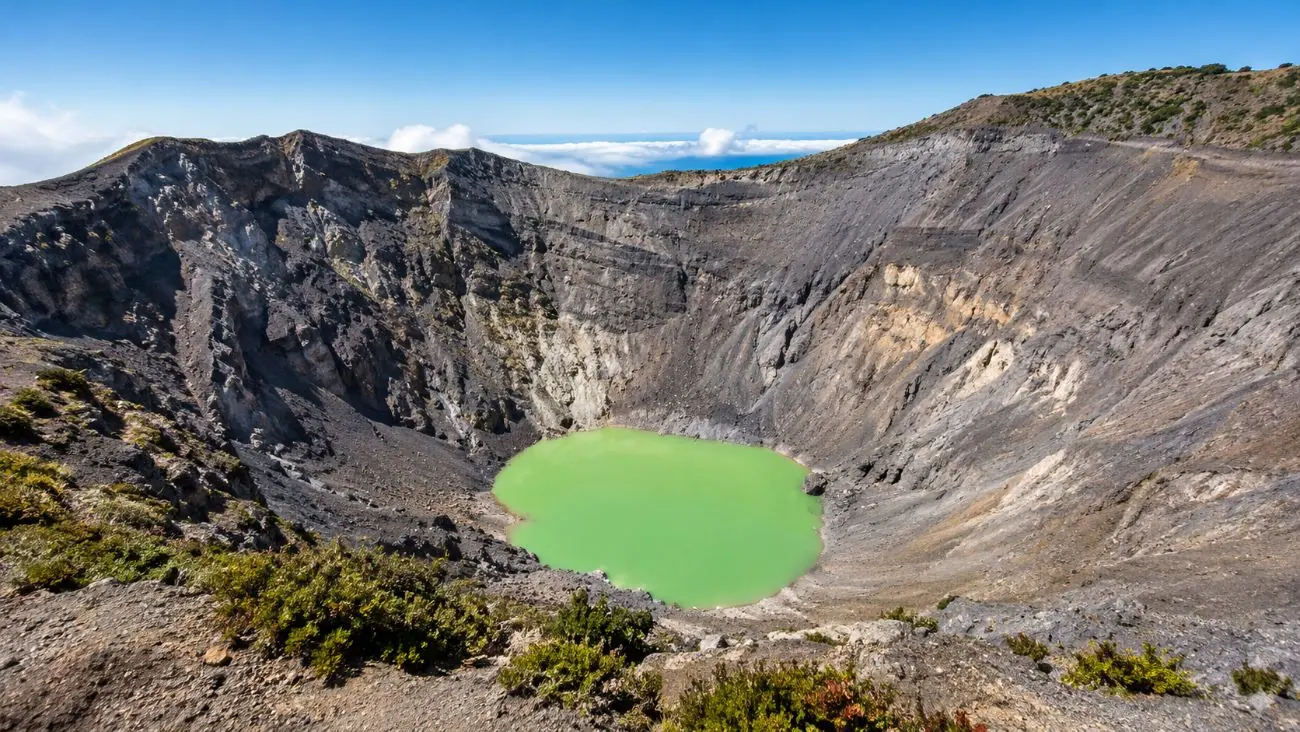
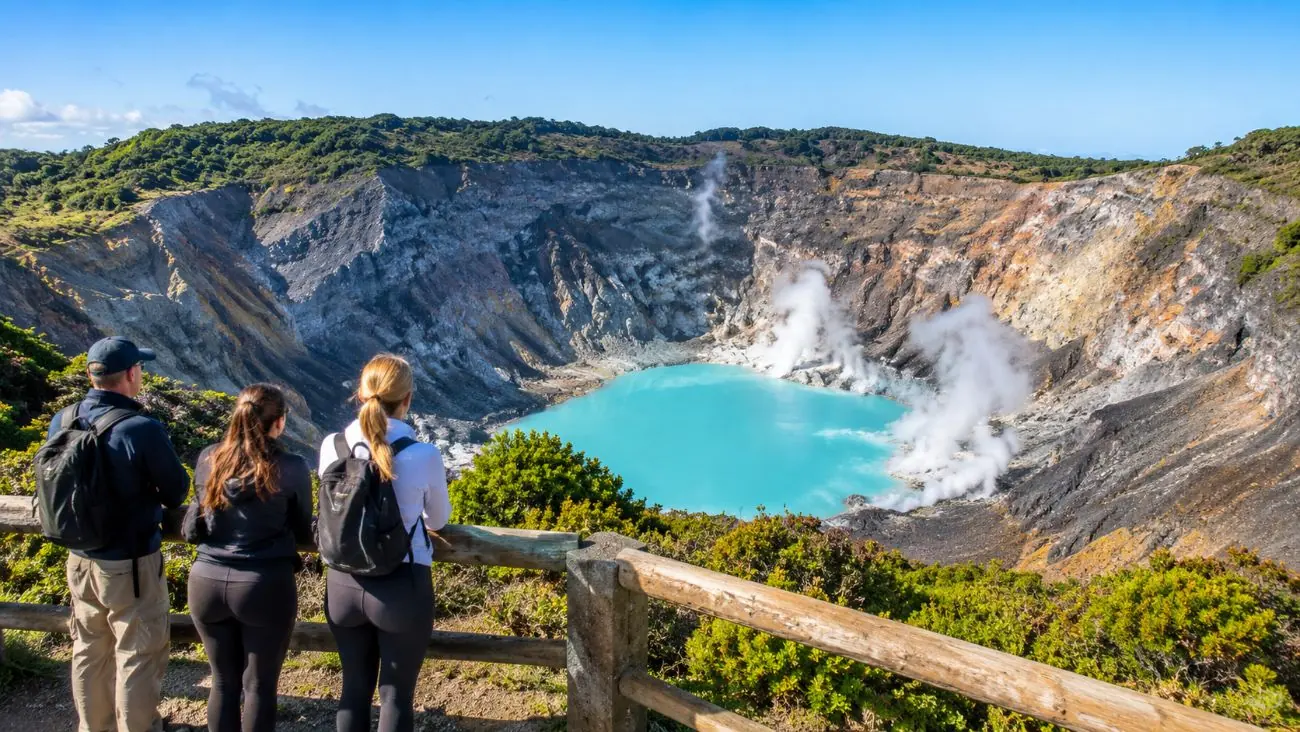
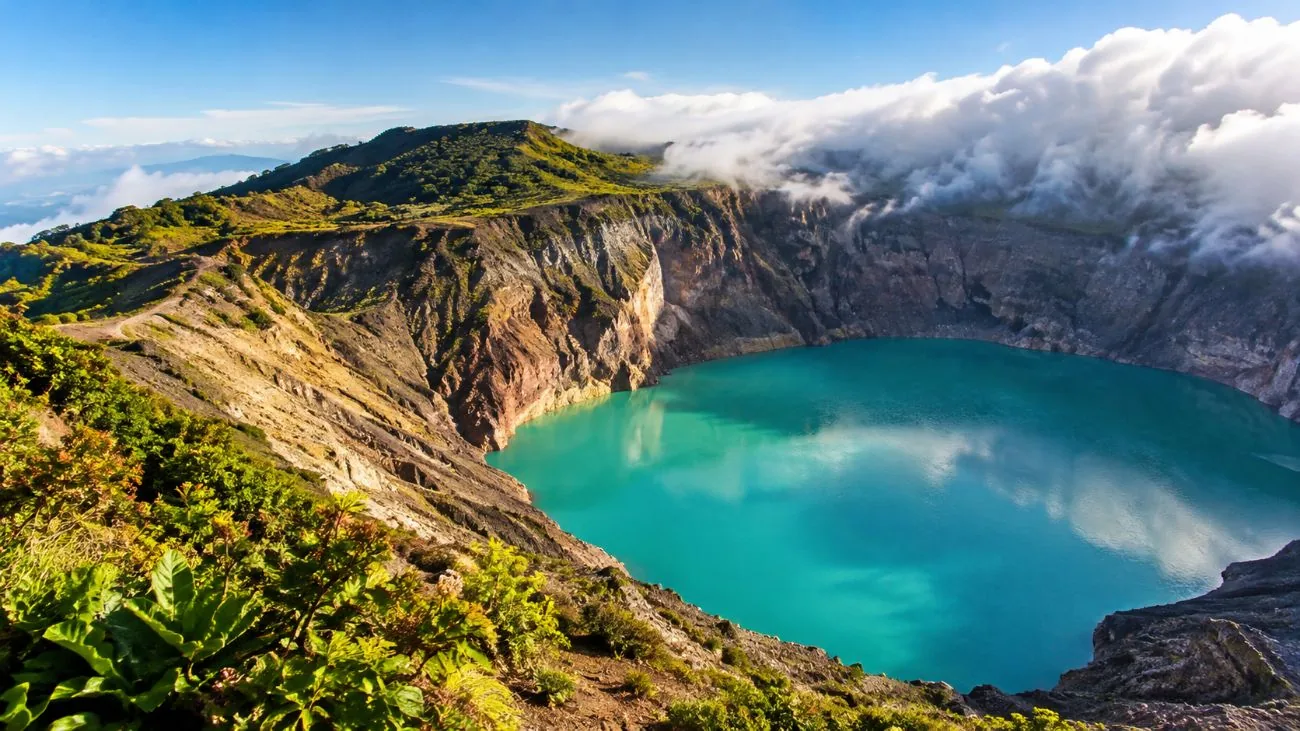
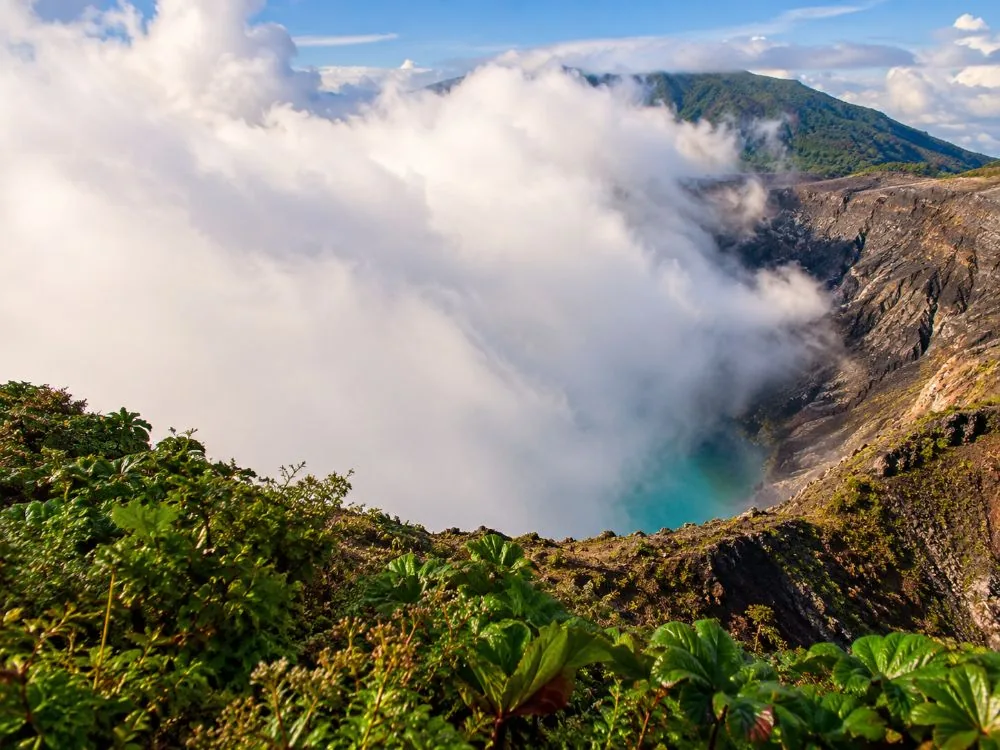
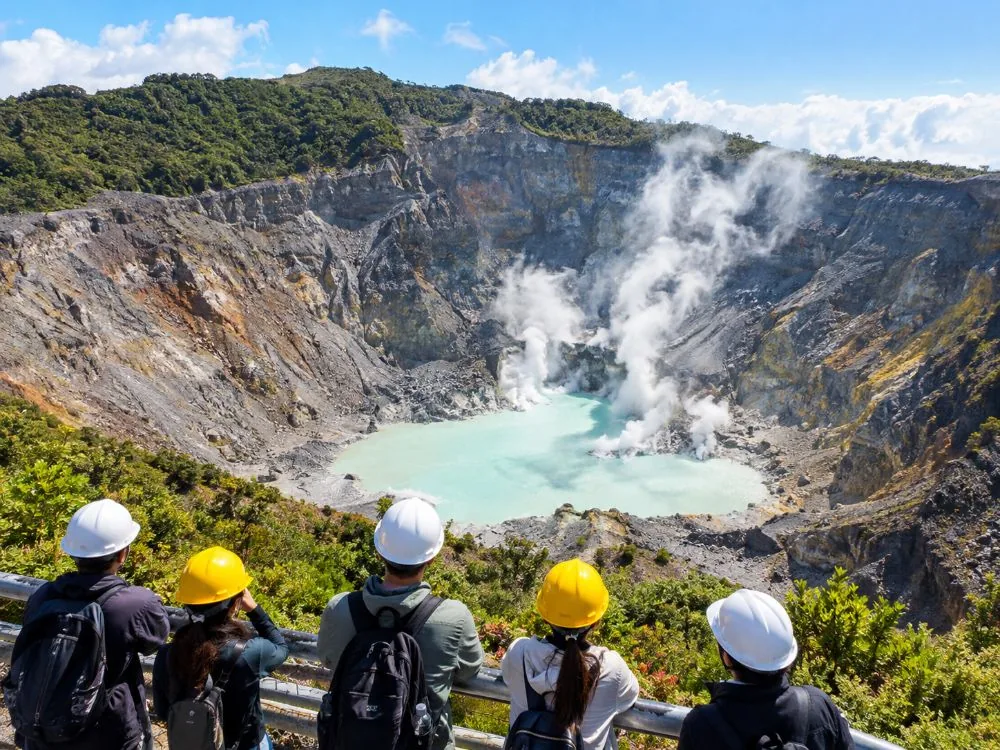
Poás makes its own weather. Warm, damp air climbs the slopes as the day heats up and condenses at the top, so the crater is often clear at 8 a.m. and full of cloud by 10:30 or 11. That is true in the dry season and the wet one, on weekdays and weekends.
The season still matters, for rain, crowds and the odds of a clear morning. Here is how to stack them in your favour.
The quick answer
Book the 8:00 or 8:30 a.m. slot. Cloud usually fills the crater by 10:30 or 11:00. The dry season, December to April, gives the best odds of a clear morning but the most visitors. June to early August is a fair compromise; October is the wettest month. Weekdays are quieter. Check the OVSICORI webcam at 7 a.m. and the park status the week you go.
What is the best time of day to visit Poás Volcano?
The first slots, 8:00 and 8:30 a.m. The park opens at 8, and the crater is most often clear in the first two hours.
By 10:30 the odds drop fast. Vamos Rent-a-Car puts the chance of a fully hidden crater between 10:30 and 11:00 at 60 to 70%. An early slot isn't a promise: some mornings the cloud never lifts, and some afternoons are clear. It is the best bet you can make.
The last admission is at 2 p.m. Afternoon slots are easy to book and often rainy in the green season. Skip them unless your schedule leaves no choice.
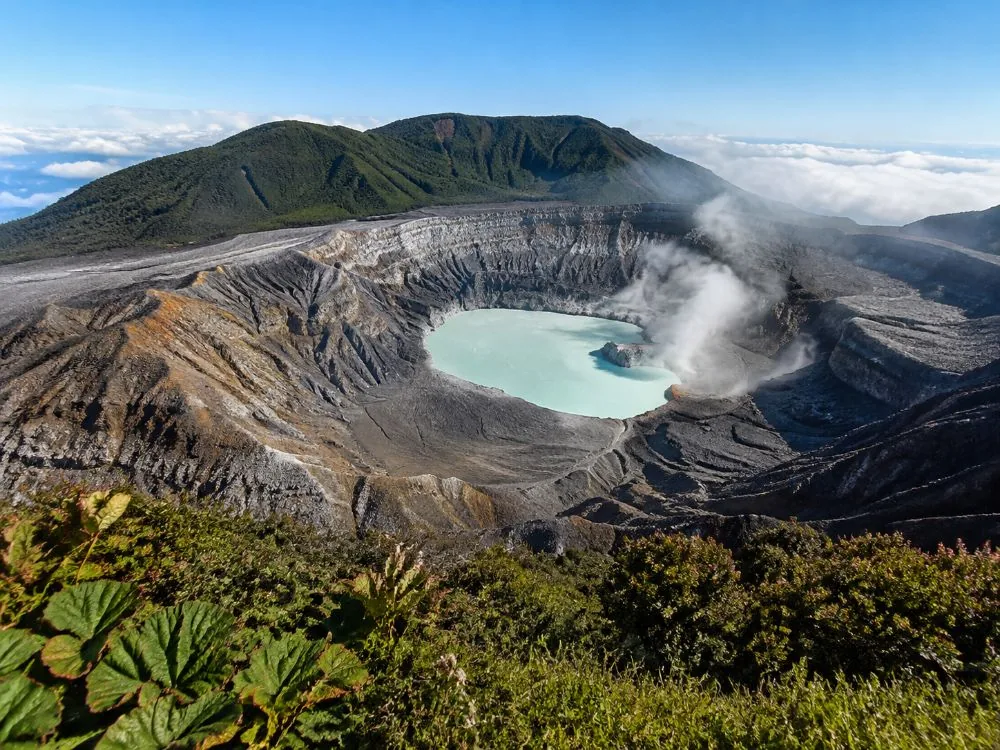
Built around the early slot: a private car for two to four, park entry and parking included.
Check dates for the private Poás tourWhy does the crater fill with cloud?
Moist air rises up the volcano as the morning warms and cools into cloud at the summit, close to 2,700 metres.
The Caribbean side of the Cordillera Central is wet, and trade winds push that moisture up the slopes. As the sun heats the land, the air climbs, cools and condenses. The crater, a bowl 300 metres deep, fills like a cup. The cloud can thin for a minute or two, so stay your full 20 minutes even if you arrive to white.
Is the dry season or the green season better for Poás?
The dry season, December to April, gives the best odds of a clear crater. The green season, May to November, is quieter, with afternoon rain.
Month by month, for the Poás summit:
| Months | Weather at the top | Crowds | Our take |
|---|---|---|---|
| December to April | Driest, often windy, clear mornings more common | Busiest, peaks at Christmas and Semana Santa | Best odds; book two to three weeks ahead for weekends |
| May | Rains return, mostly afternoons | Quieter | Good on weekdays with an early slot |
| June to early August | Showers, with drier spells | Moderate, school holidays in July | A fair compromise |
| September to November | Wettest; October is the rainiest month | Lowest | Go only with an early slot and a spare day |
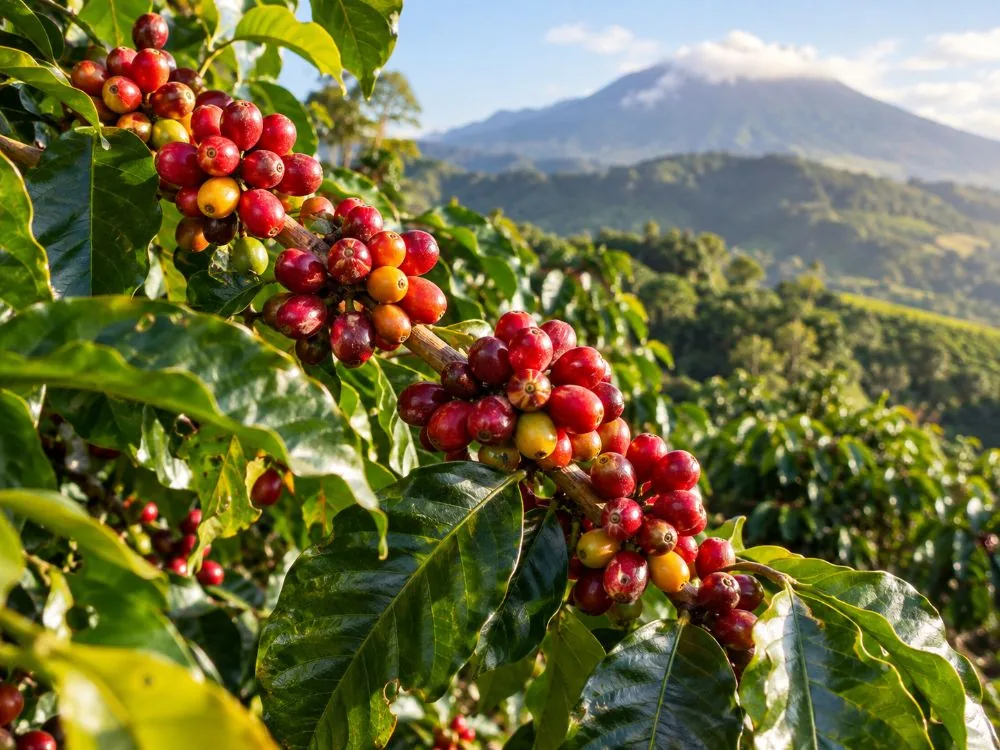
Coffee harvest on the slopes runs roughly January to February, a bonus if your tour includes a farm. Season information from Vamos Rent-a-Car and the national weather service, IMN.
What is the weather like at the top of Poás?
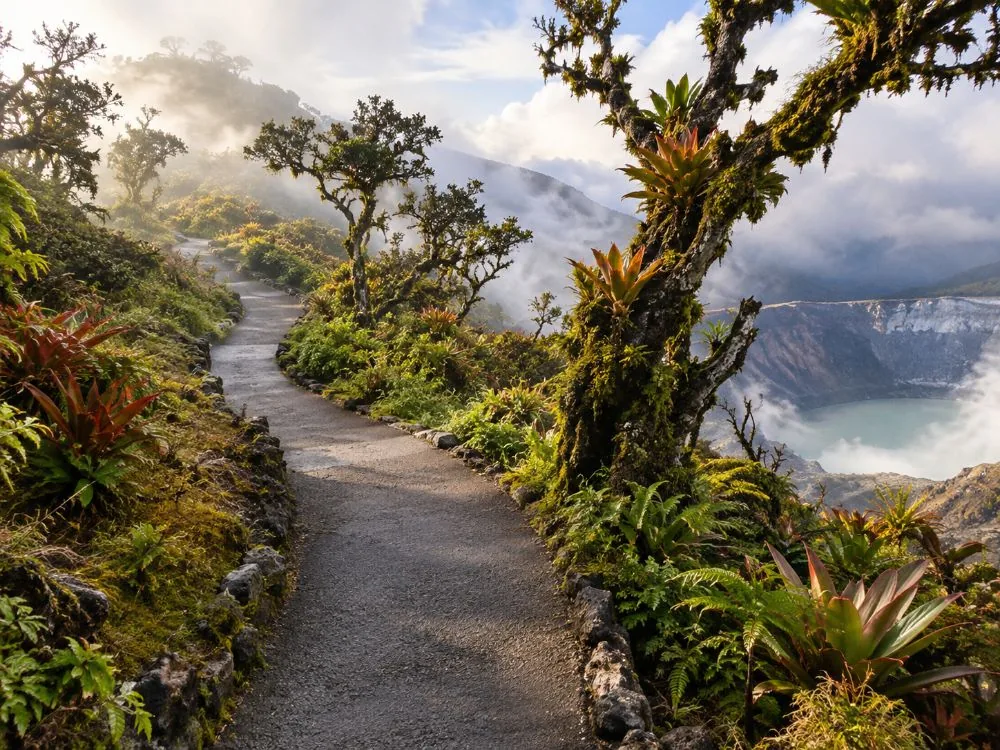
Cool, windy and often damp: about 10 to 18°C, some 8 to 11°C colder than San José.
- Bring a windproof layer, even in March. The wind at the rim is cold.
- A light rain jacket works in any season. Umbrellas are awkward with a helmet on.
- Closed shoes: the path is paved, but wet.
- A cloth for your lens: mist fogs cameras the moment you take them out.
What is the weather forecast for Poás Volcano National Park?
Forecasts for a 2,700-metre summit are rough at best. The OVSICORI crater webcam and the IMN forecast are the two to check.
Phone weather apps give a temperature and a rain chance for the area, not the crater. Better tools:
- OVSICORI's crater webcam on the OVSICORI website: look at 7 a.m. If the crater is clear, your 8:00 slot has a good start.
- IMN, Costa Rica's weather service, for regional rain and wind warnings.
- Our status post for closures and new rules.
The webcam won't help you choose a date weeks ahead. Only the season and the slot do that.
When is Poás least crowded?
On weekdays outside Christmas, New Year and Semana Santa, in the first and last slots.
Since 28 August 2026 the park admits 1,064 people a day and 56 at a time at the viewpoint, so it never gets as packed as it used to. What fills up is the booking calendar: dry-season weekends and Costa Rican holidays sell out early, and tour vans cluster in mid-morning.
A Tuesday at 8:00 in May is about as quiet as it gets. If you only have a weekend, book as soon as your dates are fixed. The tickets guide covers the booking.
When does the park close, and what happens to your booking?
Poás closes when gas, eruptions or roads make it unsafe, sometimes with a day's notice or less. SINAC reschedules; it does not refund.
Recent closures:
| When | Why | How long |
|---|---|---|
| April 2017 | Eruptions destroyed the lava dome | About 17 months, reopened 1 September 2018 |
| 26 March 2025 | Eruptions, ash columns over 4 km in April | Reopened 30 July 2025 |
| 21 January 2026 | Quebrada Tigre bridge on Route 120 at risk of collapse | Reopened 29 January 2026, 9-tonne limit |
| 27 August 2026 | Eruption, hot material up to about 600 m | New limits from 28 August |
A tour with free cancellation up to 24 hours before protects you better than a SINAC ticket. The eruptions post has the detail.
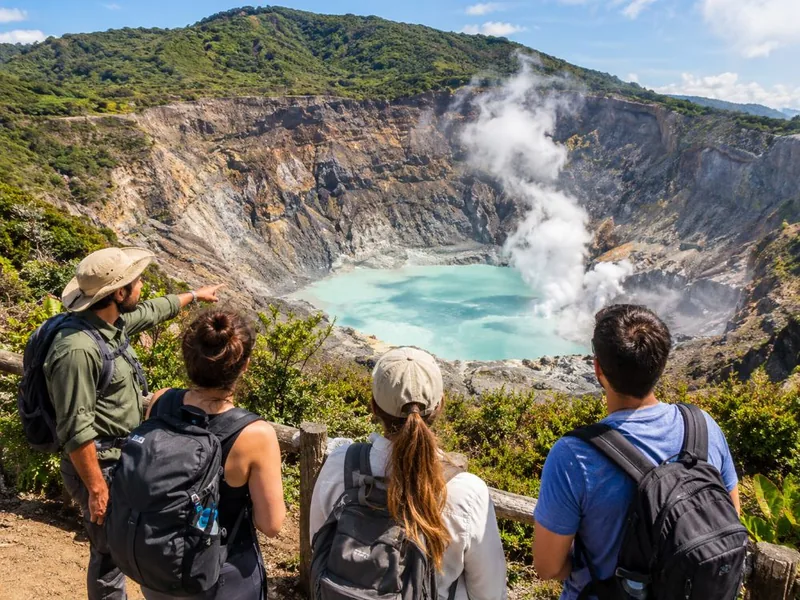
Free cancellation up to 24 hours before, hotel pickup, and lunch at Hacienda Alsacia after the crater.
Explore the volcano, waterfall and coffee day trip Tour detailsWhat is the best plan for the day?
Crater first, everything else after. Waterfalls and coffee farms look fine at noon; the crater often doesn't.
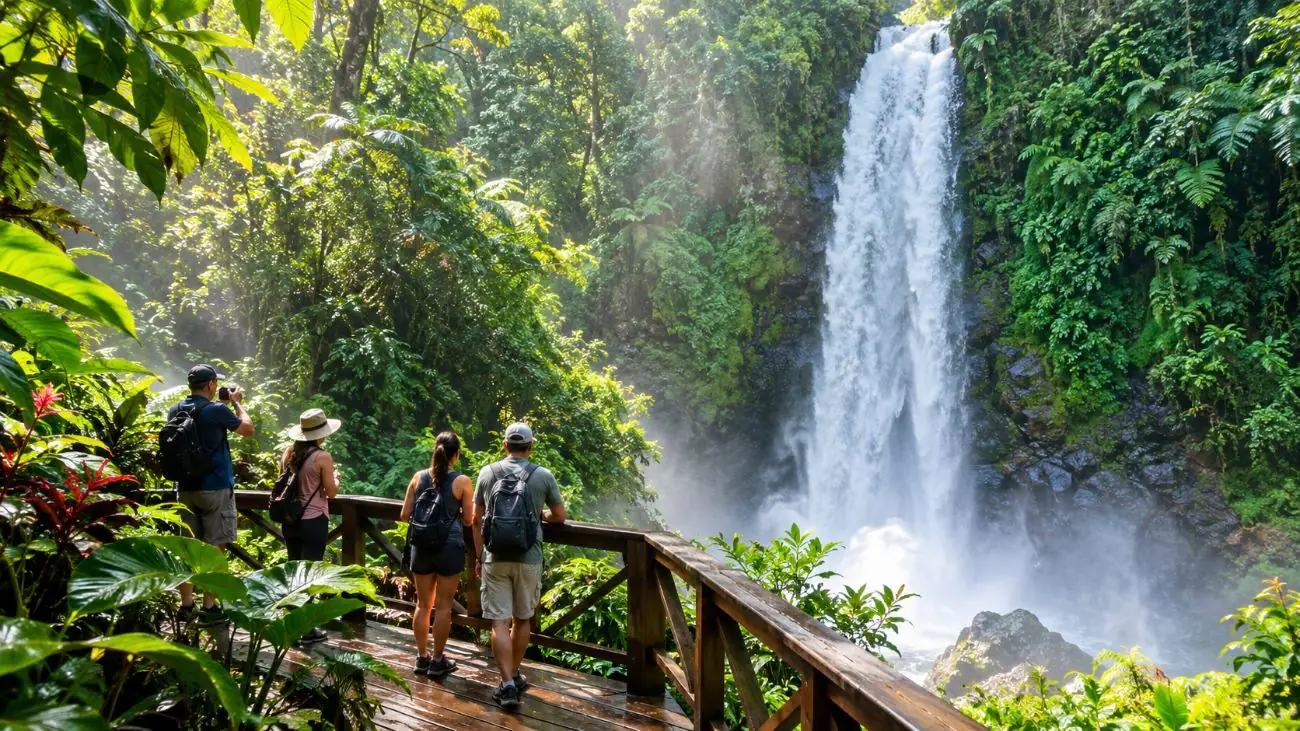
Drivers: reach the gate at 7:45 for an 8:00 slot, then head down to La Paz Waterfall or a coffee farm. Tour-takers: pick one that puts the volcano first. The big day trip visits Poás before the waterfall and lunch at Hacienda Alsacia, and the private tour is built around an early start. The Café Doka and Waterfall Gardens listings put coffee first, so ask what time you reach the rim.
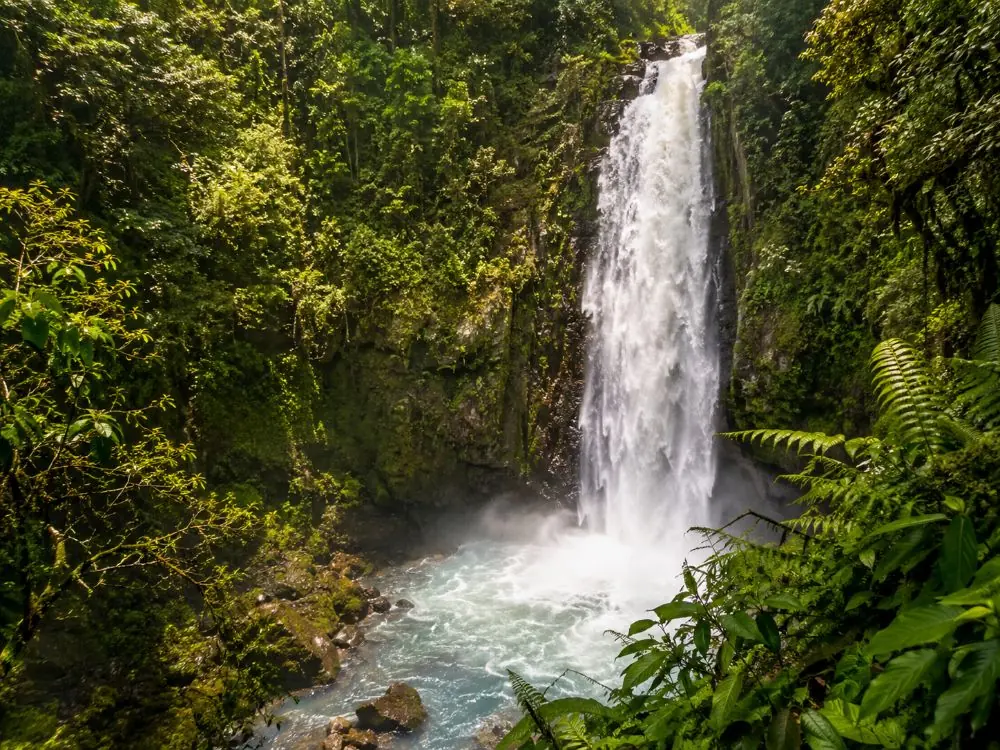
Poás before the waterfall, then lunch and a coffee tour at Hacienda Alsacia, with free cancellation up to 24 hours before.
Check dates for the volcano, waterfall and coffee day tripFrequently asked questions
What month is best to visit Poás Volcano?
February to April have the best odds of clear mornings, at the cost of crowds. In the green season, June and July are the better months. October is the wettest.
What time does Poás Volcano open?
8 a.m. The last visitors are admitted at 2 p.m. and the park closes at 4 p.m. You enter at the slot you booked.
Is Poás always cloudy?
No, but cloud is common from mid-morning. Many visitors see a clear crater at 8 or 8:30 a.m.; by 10:30 or 11 it is often full.
Is it cold at Poás Volcano?
Cool rather than cold: about 10 to 18°C, with wind and drizzle. A fleece or windproof jacket is enough.
Ready to book
Choose your tour
Free cancellation up to 24 hours before on most options. Prices are from-prices in USD and move with the season.

Private Poás Volcano & La Paz Waterfall
- Private guide and electric vehicle, 2 to 4 people
- Hotel pickup within the Central Valley (GAM)
- Park entrance and parking fees
Poás Volcano, Waterfall & Coffee Farm Day Trip
- Hotel pickup and drop-off in San José
- Live guide in English and Spanish
- Poás Volcano National Park entry fee
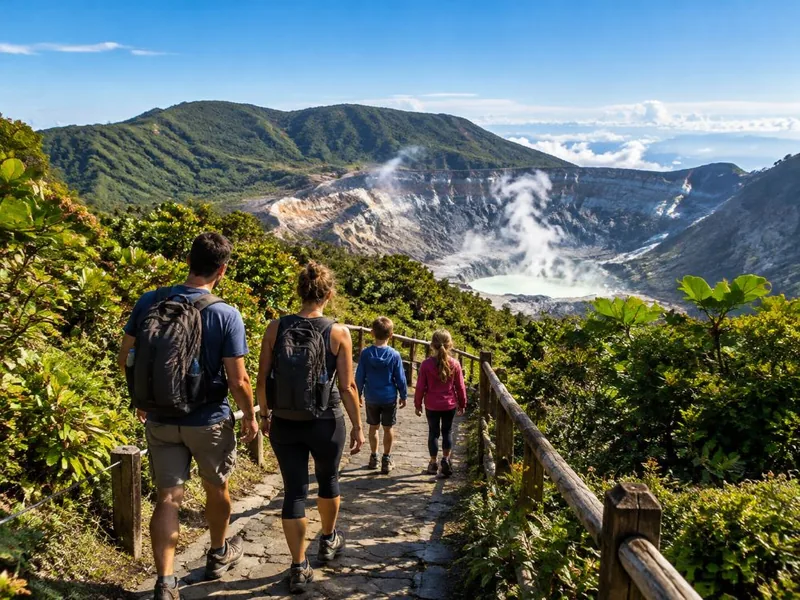
Poás Volcano National Park Admission Ticket
A resold entry with free cancellation, for drivers