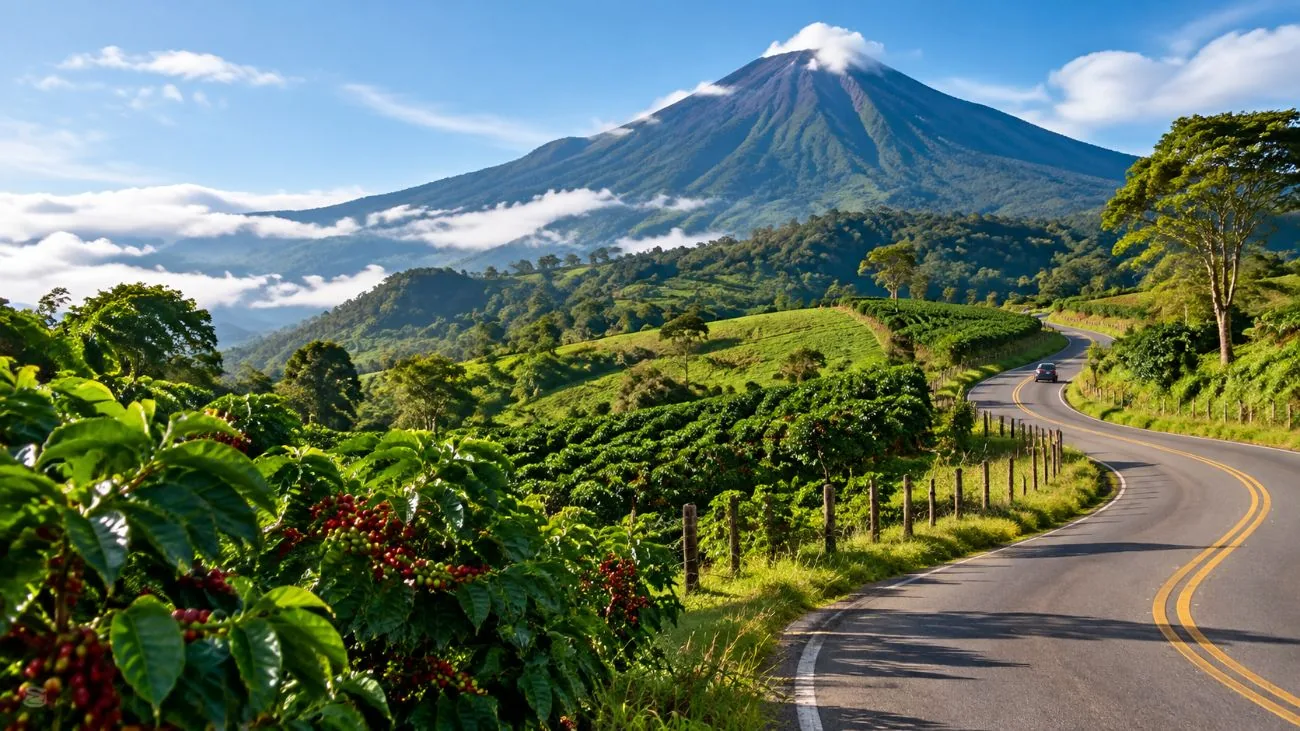
Booking choice: The volcano, waterfall and coffee day trip, from $139 per person. Check dates Tour details
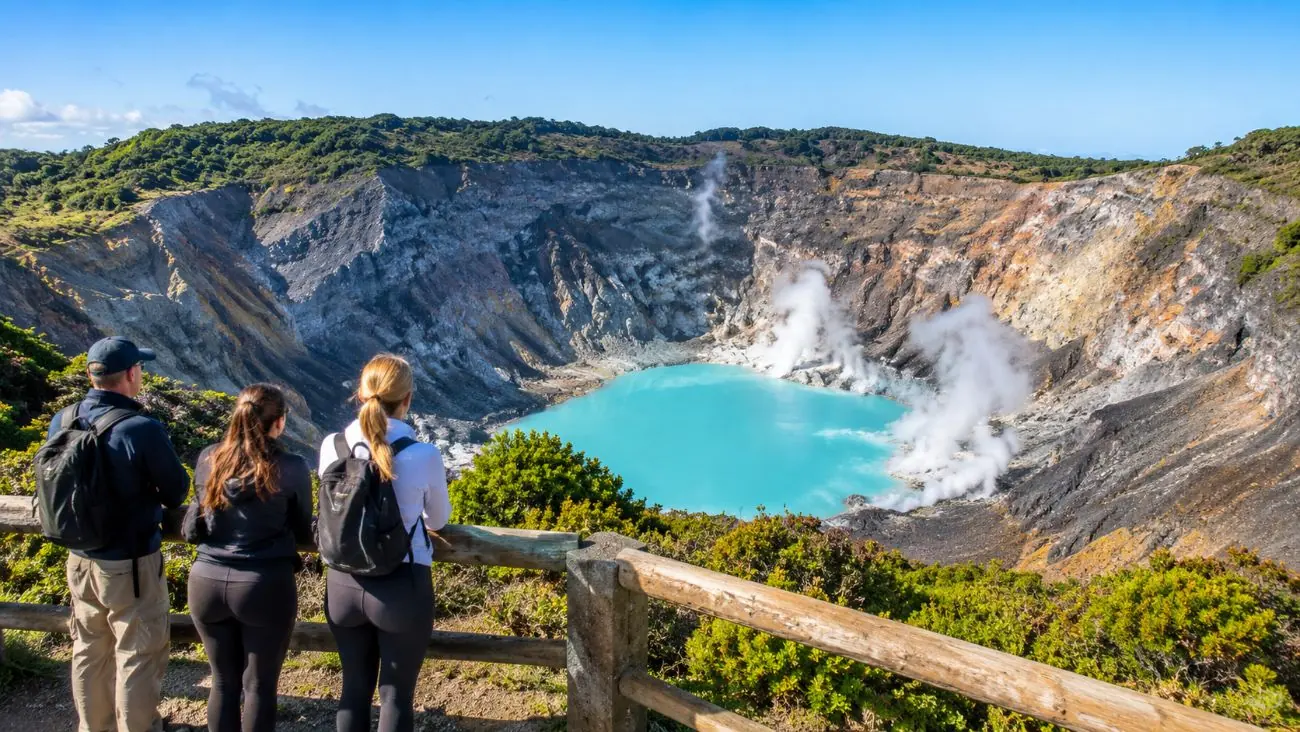
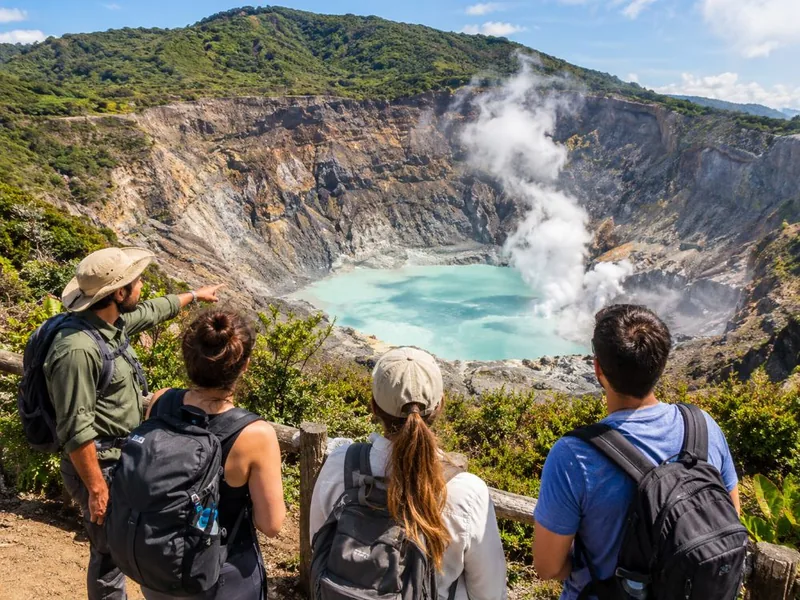
Poás is the easiest active volcano in Costa Rica to see up close. A paved road climbs from Alajuela through dairy farms and strawberry fields to a car park near the summit, and a short path leads to a railing on the edge of the main crater. Down below sits Laguna Caliente, one of the most acidic lakes on Earth, with gas rising from vents on its shore.
It is also a short visit with a lot of ways to go wrong. Since 28 August 2026 every group gets 20 minutes at the viewpoint, cloud usually fills the crater by 10:30 or 11:00, and the park can close at short notice. Here is what you actually get, and how to make the trip count.
The quick answer
Yes, if you reach the rim early. Book an 8:00 or 8:30 a.m. slot, give the park about an hour, and you have a good chance of seeing the full crater and its turquoise lake. Go at 11 a.m. and you often see cloud. The walk is easy, about 700 metres on a paved path. There is no flowing lava. Pair the crater with a waterfall or a coffee farm and it fills a relaxed day from San José.
Is Poás Volcano worth seeing in 2026?
Yes, for most visitors. It is the closest you can get to an active crater in Costa Rica without a hike, and it sits about an hour from the main airport.
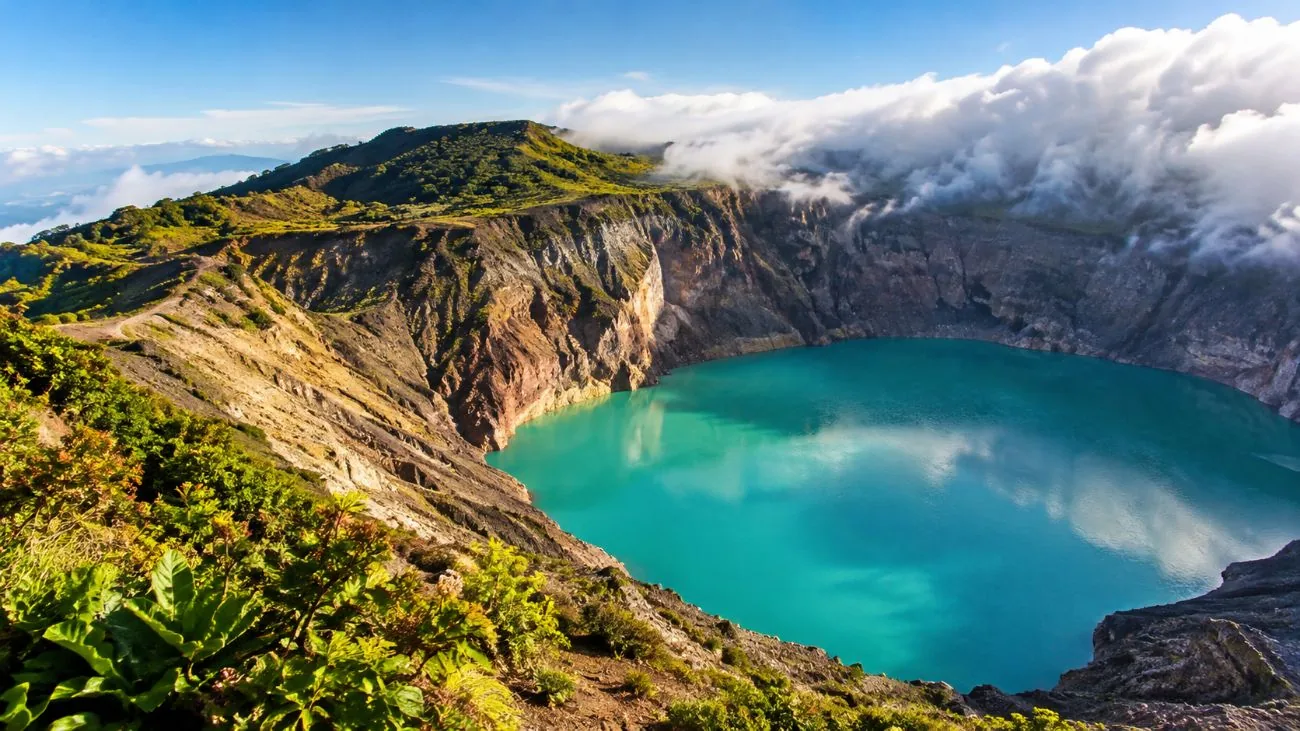
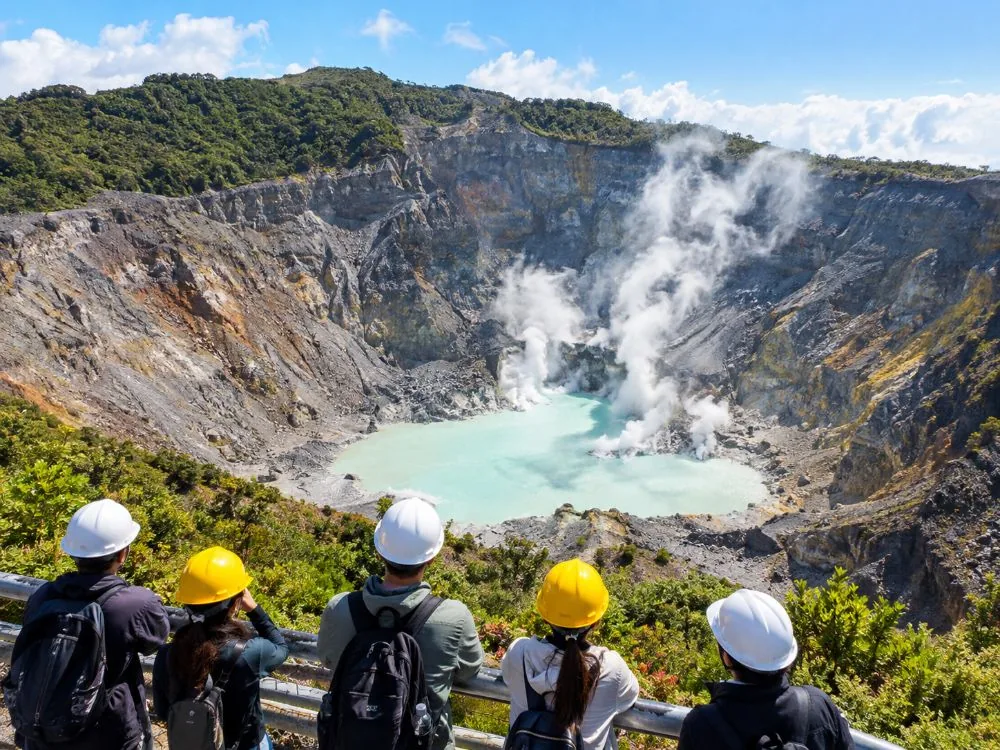
The crater is about 1.5 km across and 300 metres deep, and you stand right on its rim. On a good morning the lake is milky turquoise, the walls are grey and ochre, and white gas drifts off the vents. It looks unreal, and photos rarely show the scale.
What makes it worth the drive is how little effort it asks. No guide is needed, no fitness, no hiking boots. What makes it a gamble is the weather and the volcano itself: the park closed for most of 2017-18, from March to July 2025 and again in January 2026, and it now runs under tighter rules after the eruption of 27 August 2026. Check the park status the week you go.
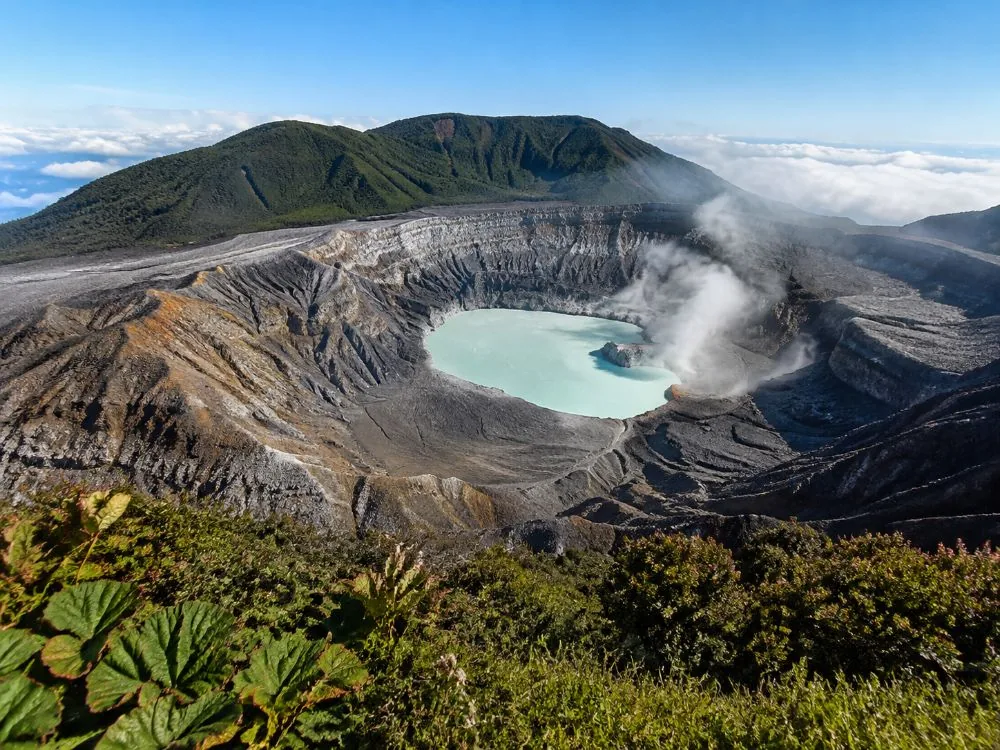
What will you actually see at the crater?
A huge crater with an acid lake, steaming vents and, on some days, a tall plume of gas. You will not see flowing lava: Poás doesn't produce it.
- Laguna Caliente: the main crater lake, with a pH that can drop close to 0 and liquid sulfur on the bottom. Its level and colour shift; after a wall collapse in April 2026 it rose about 3 metres within days, according to OVSICORI's Geoffroy Avard in the Tico Times.
- Gas and steam: the plume can be thin or tall. On 9 October 2026 a big plume made the news, and OVSICORI called it normal degassing, not an eruption.
- Cloud forest: stunted, mossy trees and giant poor man's umbrella leaves along the path.
- Not on the list: lava, glowing rock, or the cold green Laguna Botos. The Botos trail was not among the trails named open in the August 2026 rules, even if some tour listings still mention it.
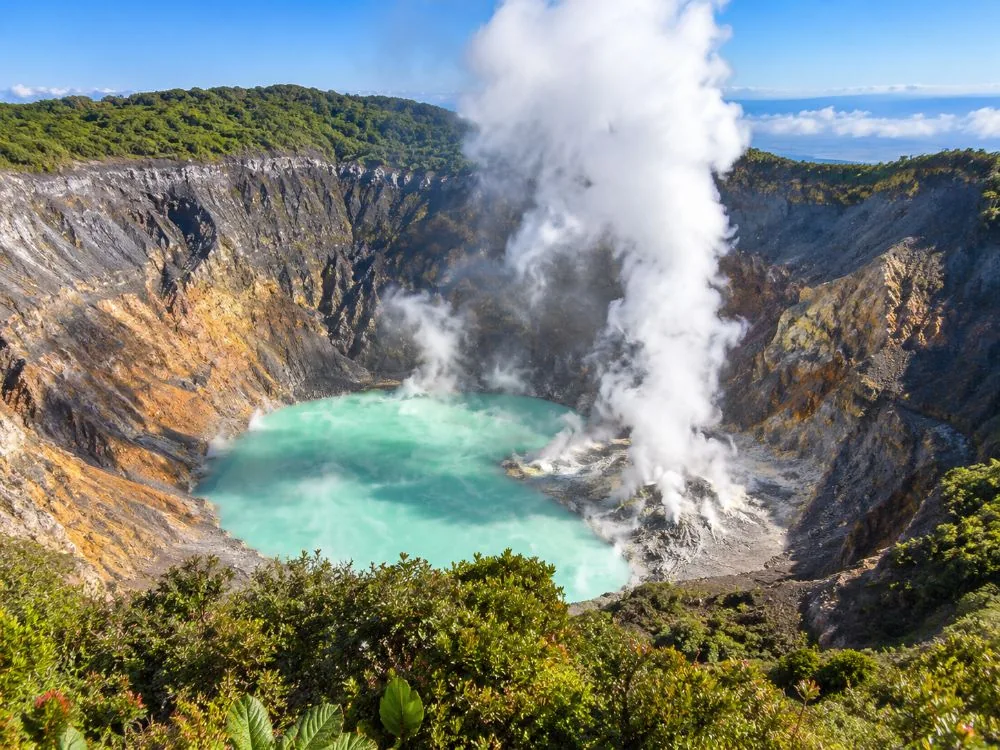
How much time do you need at Poás?
About an hour inside the park. Add 1.5 hours each way from San José, or about 1 hour from the airport.
The 20 minutes at the viewpoint is fixed. The rest is walking and waiting. A typical visit runs like this:
| Step | Time it takes |
|---|---|
| Park and pay for parking | Arrive about 15 minutes before your slot |
| Ranger briefing and helmets | About 10 minutes |
| Walk up the paved path | 15 to 20 minutes for about 700 metres |
| At the crater viewpoint | 20 minutes, 56 people at a time |
| Walk down, visitor centre | 15 to 20 minutes |
| Sombrilla de Pobre trail (optional) | A short loop through cloud forest |
That leaves most of a day free, which is why the tours pair the crater with La Paz Waterfall and a coffee farm. The Café Doka listing breaks its park time down as 10 minutes of talk, 10 of walking, 20 at the viewpoint and 10 back: about 50 minutes.
Crater first, then La Paz Waterfall and lunch at Hacienda Alsacia, with park entry booked for you.
Check dates for the volcano, waterfall and coffee day tripHow difficult is the hike to Poás Volcano?
Easy. It is a gentle paved path of about 700 metres from the car park to the viewpoint, 15 to 20 minutes on foot.
The path climbs gently through cloud forest. Children manage it, and so do most older travellers. What catches people out is the altitude: the summit is close to 2,700 metres, and a fast walk leaves some visitors short of breath. Take it slowly.
The thin, sulfurous air matters more if you have asthma, heart trouble or another breathing condition. Check with your doctor before you go, and turn back if the gas makes you cough. Helmets are compulsory on both open trails, the main path and Sombrilla de Pobre. For wheelchair users, ask the operator: the private tour lists itself as wheelchair accessible, the big day trip says it is not suitable.
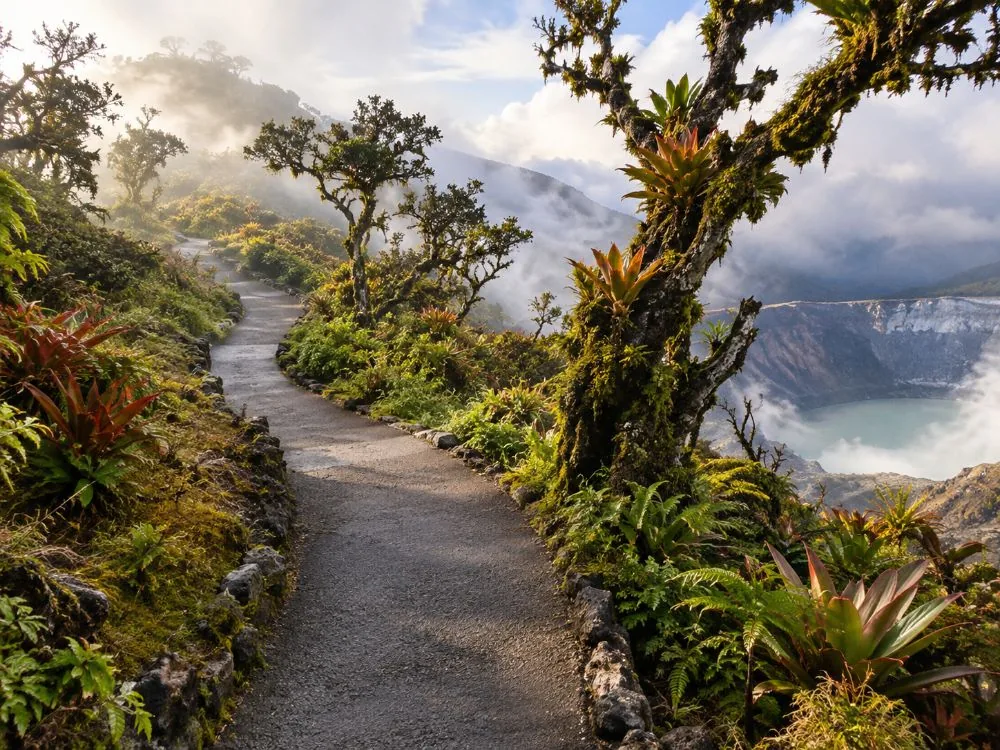
What type of volcano is Poás, and how high is it?
Poás is an active stratovolcano in Costa Rica's Cordillera Central. Its summit is about 2,700 metres (roughly 8,850 feet) above sea level.
It has erupted around 40 times since 1828. The numbers that matter for a visit, from the volcano's records and Volcano Guide:
| Poás in numbers | Figure |
|---|---|
| Summit height | About 2,697 to 2,708 m (8,850 to 8,885 ft) |
| Main crater | About 1.5 km wide and 300 m deep |
| Laguna Caliente pH | Sometimes close to 0 |
| Eruptions since 1828 | About 40 |
| Volcanic alert | OVSICORI level 2 of 4 through 2026 |
| National park | Created 25 January 1971, 65 km² |
Some tour listings still say Poás "last erupted in 2017". That is out of date. It threw ash more than 4 km high in April 2025 and erupted again on 27 August 2026. The history is in the 2025-2026 eruptions post.
Is Poás Volcano safe to visit right now?
The park is open under limits set after the August 2026 eruption, and the authorities close it when risk rises. Follow the rangers and you are in a managed area.
Since 28 August 2026 the park takes 1,064 visitors a day, down from 2,052, with helmets on the open trails and 20-minute turns at the viewpoint (Tico Times, Delfino). The CNE emergency commission keeps a green alert in place. The rules have no end date and could tighten further.
The real risk comes from people who cross the railings. Entering the crater or closed ground carries a fine of CRC 1,386,600 under Law 10,861, in force since April 2026. Stay on the path, listen to the briefing, and leave if the rangers say leave.

Two to four people in an electric car, timed for the early slot, with park entry and parking included.
Explore the private Poás tour Tour detailsWhen is Poás not worth it?
When you can only get a late slot, when the forecast is solid cloud, or when you came hoping for lava.
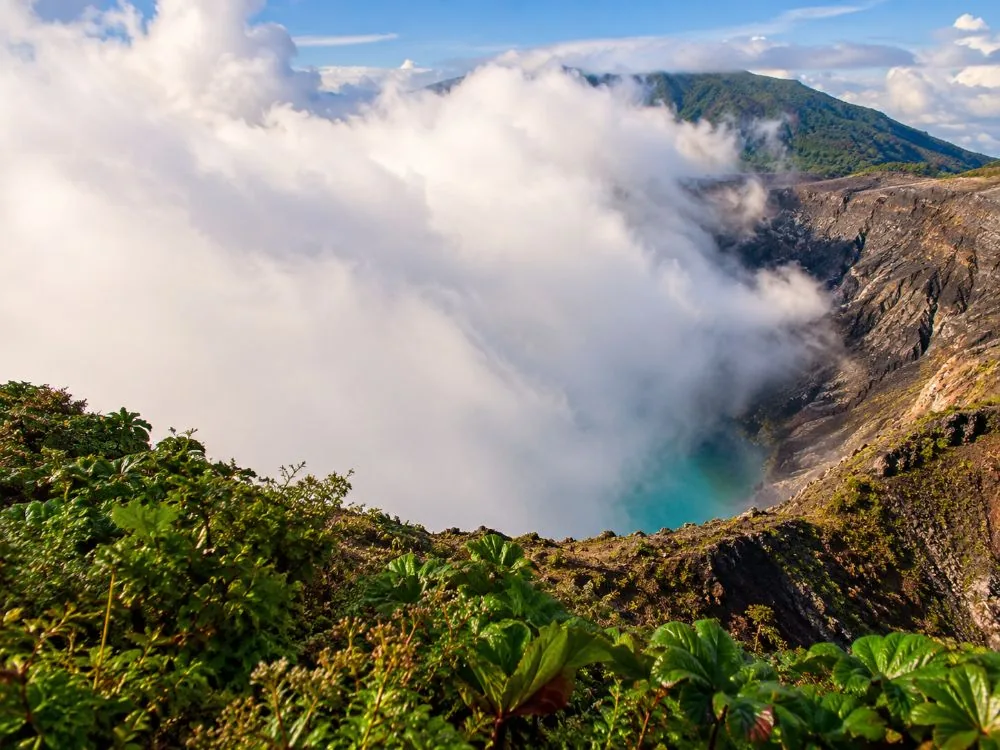
- A slot after 10:30: cloud usually fills the crater by 10:30 or 11:00. Vamos Rent-a-Car puts the chance of a fully hidden crater at 60 to 70% in that window.
- Lava hopes: Poás has gas, steam and a lake. For a classic cone, Arenal is the one to look at, from a distance.
- One day in the Central Valley, with a flight that afternoon: a closure or a cloudy rim leaves no second try. Keep a spare morning if you can.
- Expecting a long hike: the walking adds up to well under 2 km. Hikers will want more.
No tour can promise a clear crater. What they can do is get you there early. The best time to visit guide goes into the timing.
Is a tour worth it, or should you go on your own?
Drive yourself if you have a car and can book an 8:00 slot. Take a tour if you don't want to drive mountain roads or juggle the SINAC booking.
Going alone costs US$16.95 for a foreign adult on SINAC plus a few dollars of parking. A tour costs more but adds pickup, the ticket and, on most, a second and third stop:
| How you go | From (per person) | What you get |
|---|---|---|
| Own car | US$16.95 plus parking and fuel | Your choice of slot, but you book SINAC yourself |
| Resold entry ticket | $32 | Self-drive entry with free cancellation up to 24 hours before |
| Volcano and coffee tasting | $105 | Full day with La Paz Waterfall and coffee |
| Volcano, waterfall and coffee day trip | $139 | Pickup, entry, lunch at Hacienda Alsacia |
| Private Poás and La Paz | $183 | Your group only, early access |
Most tours here cancel free up to 24 hours before. SINAC's own ticket does not refund for weather. More on that in the tickets guide.
Hotel pickup in San José, park entry, the La Paz Waterfall stop and lunch with a coffee tour at Hacienda Alsacia.
Explore the volcano, waterfall and coffee day trip Tour detailsFrequently asked questions
Can you visit Poás Volcano now?
Yes. The park is open under the rules of 28 August 2026: 1,064 visitors a day, 20 minutes at the viewpoint and helmets on the open trails. It can close at short notice, so check the status post before you go.
Can you see lava at Poás?
No. Poás has an acid crater lake, steaming vents and gas plumes, but no flowing lava. No volcano in Costa Rica has shown flowing lava to visitors since Arenal's eruptive phase ended in 2010.
Is Poás worth it if it is cloudy?
Less so. A cloudy crater shows only a white wall. The cloud can lift for a minute or two, so wait out your 20 minutes, but book the earliest slot to cut the odds.
Is Poás good for kids?
Yes. The path is short and paved, and children 2 to 12 pay US$5.65 on SINAC. Bring warm layers: it is 10 to 18°C at the top.
Ready to book
Choose your tour
Free cancellation up to 24 hours before on most options. Prices are from-prices in USD and move with the season.
Poás Volcano, Waterfall & Coffee Farm Day Trip
- Hotel pickup and drop-off in San José
- Live guide in English and Spanish
- Poás Volcano National Park entry fee
Private Poás Volcano & La Paz Waterfall
- Private guide and electric vehicle, 2 to 4 people
- Hotel pickup within the Central Valley (GAM)
- Park entrance and parking fees

Poás Volcano, La Paz Waterfall & Coffee Tasting
- Pickup available from San José
- Poás Volcano crater viewpoint
- La Paz Waterfall stop