Booking choice: The volcano, waterfall and coffee day trip, from $139 per person. Check dates Tour details
Poás and Irazú are the two volcanoes most visitors to the Central Valley pick between. Both let you drive almost to the rim, both need a SINAC slot, and both cost foreign adults the same US$16.95. They feel very different once you are up there.
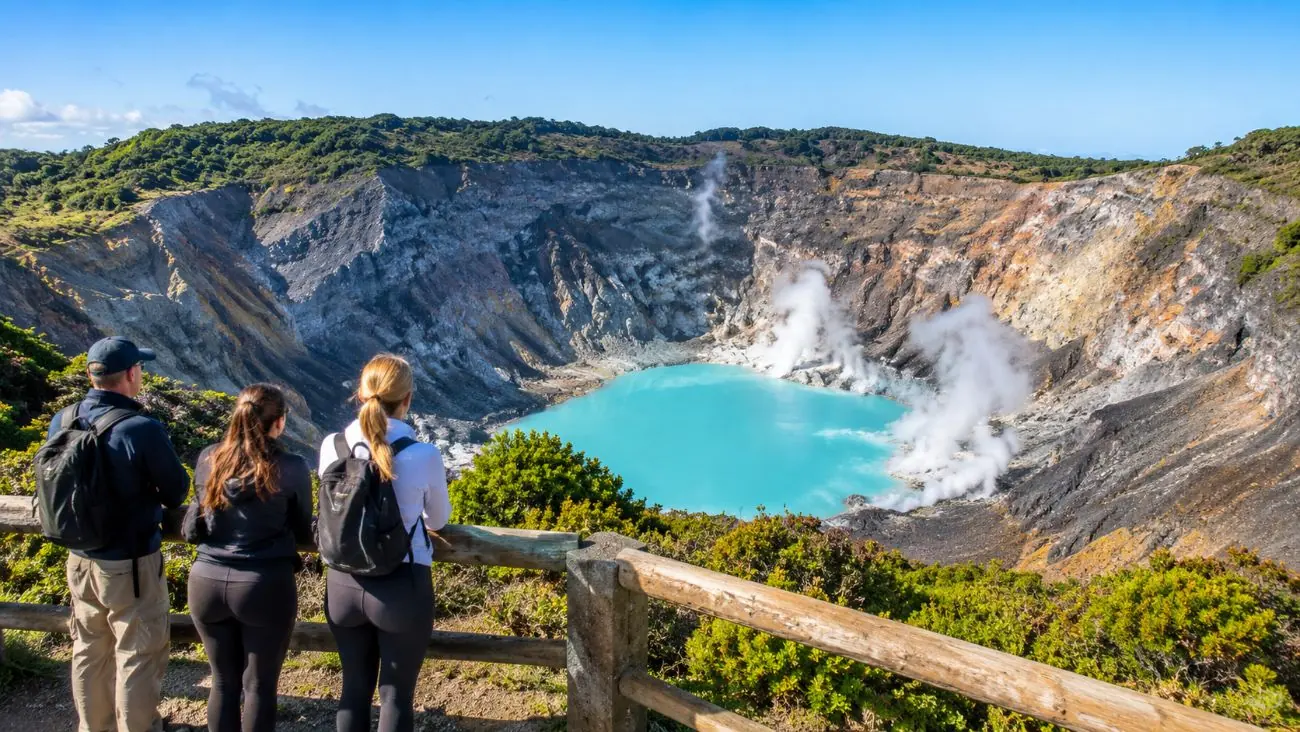
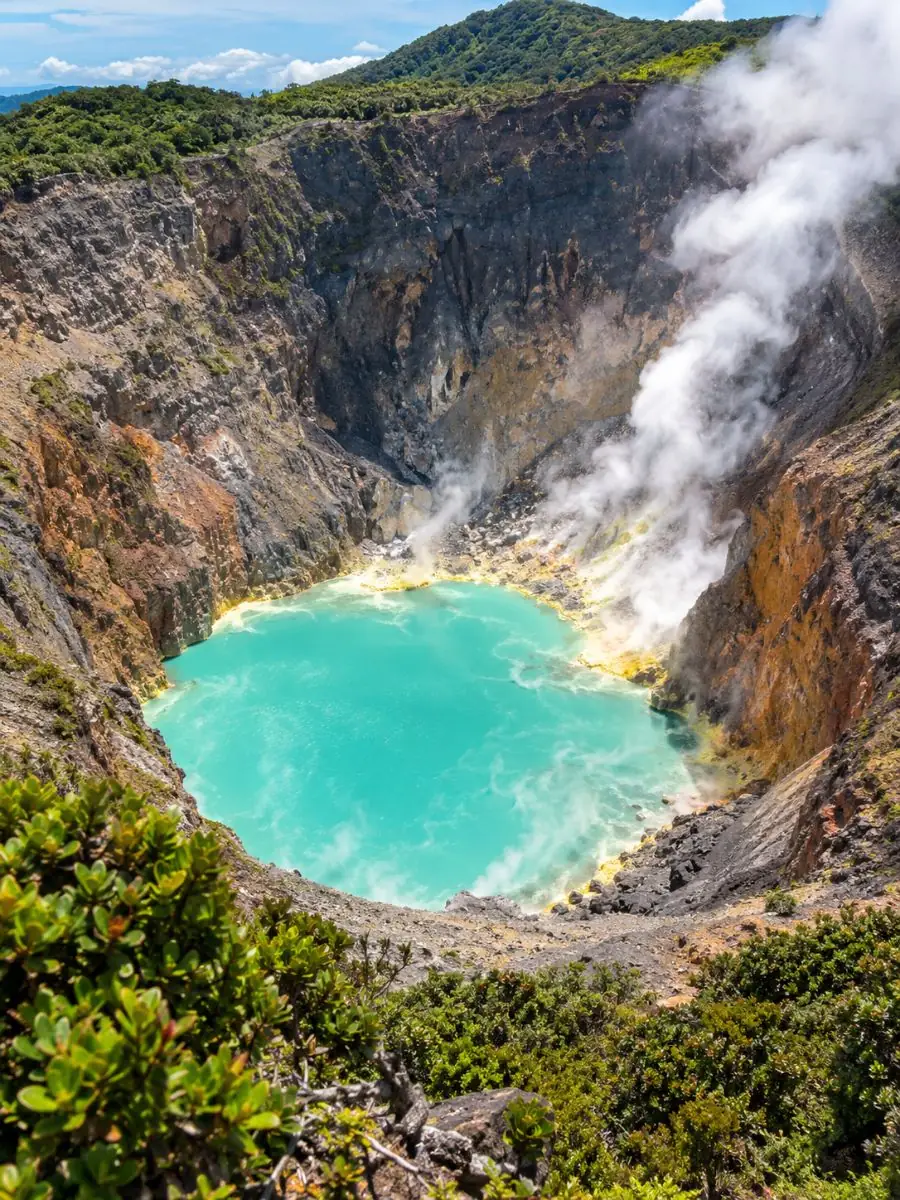
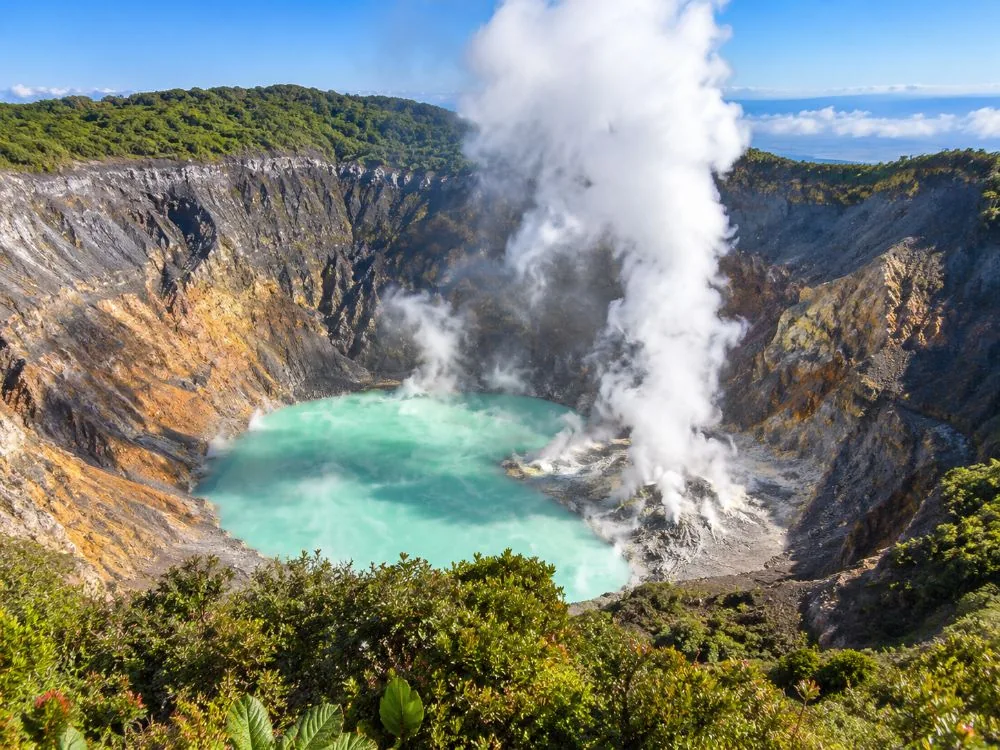
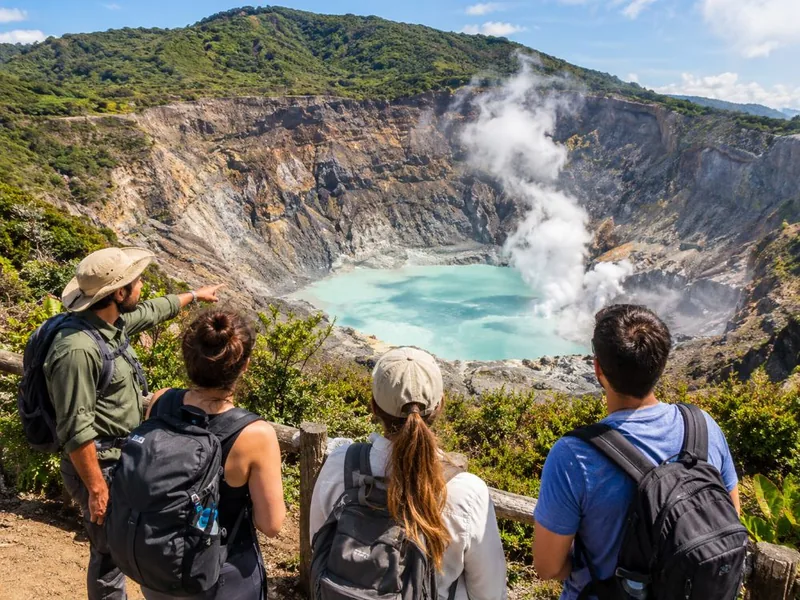
Poás is the active one, with a steaming turquoise lake in a single huge crater. Irazú is the highest volcano in Costa Rica, at 3,432 metres, with bare grey craters and, on rare clear days, both coasts in view. Here is how they compare, and where Arenal, Rincón de la Vieja and Turrialba fit.
The quick answer
Pick Poás for the more dramatic single crater and lake, an active volcano, and a road that starts next to the airport. Pick Irazú for the height, a lunar landscape, more walking along the rim and a base on the Cartago side near Orosi. Both cost US$16.95 for foreign adults on SINAC and both cloud over by mid-morning. With one morning, most first-timers should choose Poás.
Which volcano is better, Poás or Irazú?
For most first-time visitors, Poás: the crater is more striking and it is an hour from the airport. Irazú wins on height, space and walking.
Poás gives you one big moment, 20 minutes at a railing over a steaming crater 1.5 km wide. Irazú is slower: several craters, grey ash slopes and room to walk along the rim at 3,400 metres. If you have seen photos of both and the turquoise lake is what you want, there is no contest.
Irazú is the pick when Poás is closed, when you are staying on the Cartago side, or when you want a volcano with fewer restrictions. Poás has run under tighter limits since its eruption of 27 August 2026.
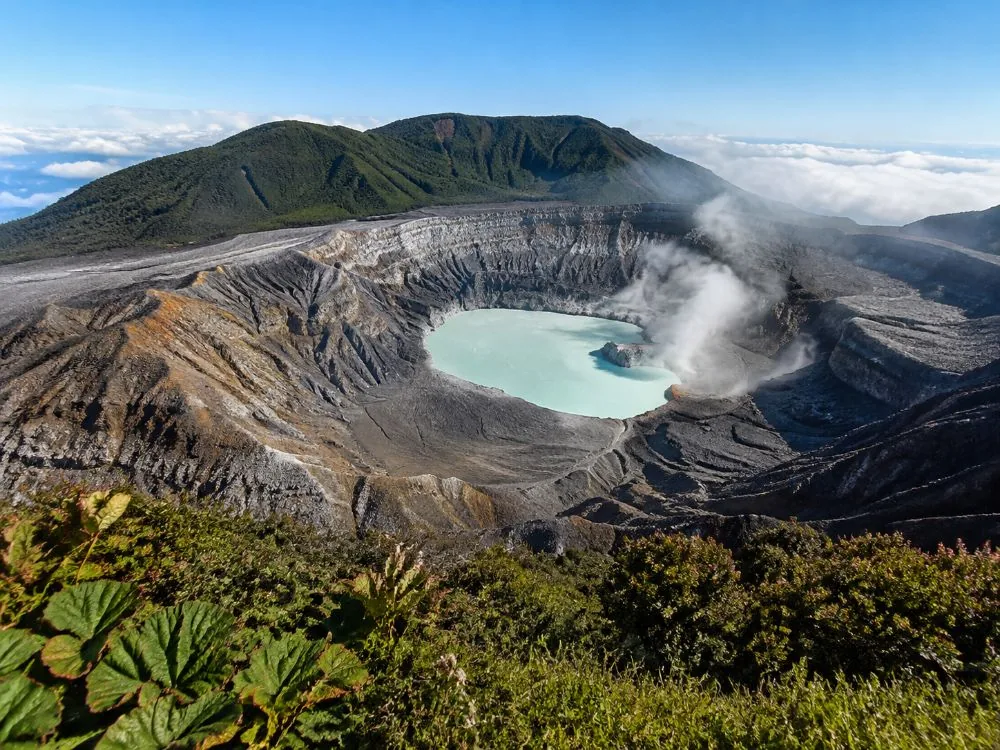
How do Poás and Irazú compare at a glance?
Same ticket price, similar drive from San José, very different craters.
Figures from SINAC's fares, the August 2026 Poás rules, Vamos Rent-a-Car's Irazú guide (March 2026) and the Irazú records:
| Poás | Irazú | |
|---|---|---|
| Height | About 2,700 m | 3,432 m, the highest in Costa Rica |
| Main crater | About 1.5 km wide, 300 m deep, turquoise acid lake | About 1 km wide, 300 m deep, grey walls |
| Activity | Erupting in 2025 and 2026, alert level 2 of 4 | Big eruption 1963-65, small one in 1994 |
| Foreign adult ticket | US$16.95 on SINAC | US$16.95 |
| Hours | 8 a.m. to 4 p.m., last entry 2 p.m. | 8 a.m. to 3:30 p.m. (ICT) |
| Time at the crater | 20 minutes at the viewpoint | No fixed limit on the rim paths |
| From San José | About 1.5 hours via Alajuela | About 1.25 to 1.5 hours via Cartago |
| From the airport | About 1 hour | 1.5 hours or more, across the city |
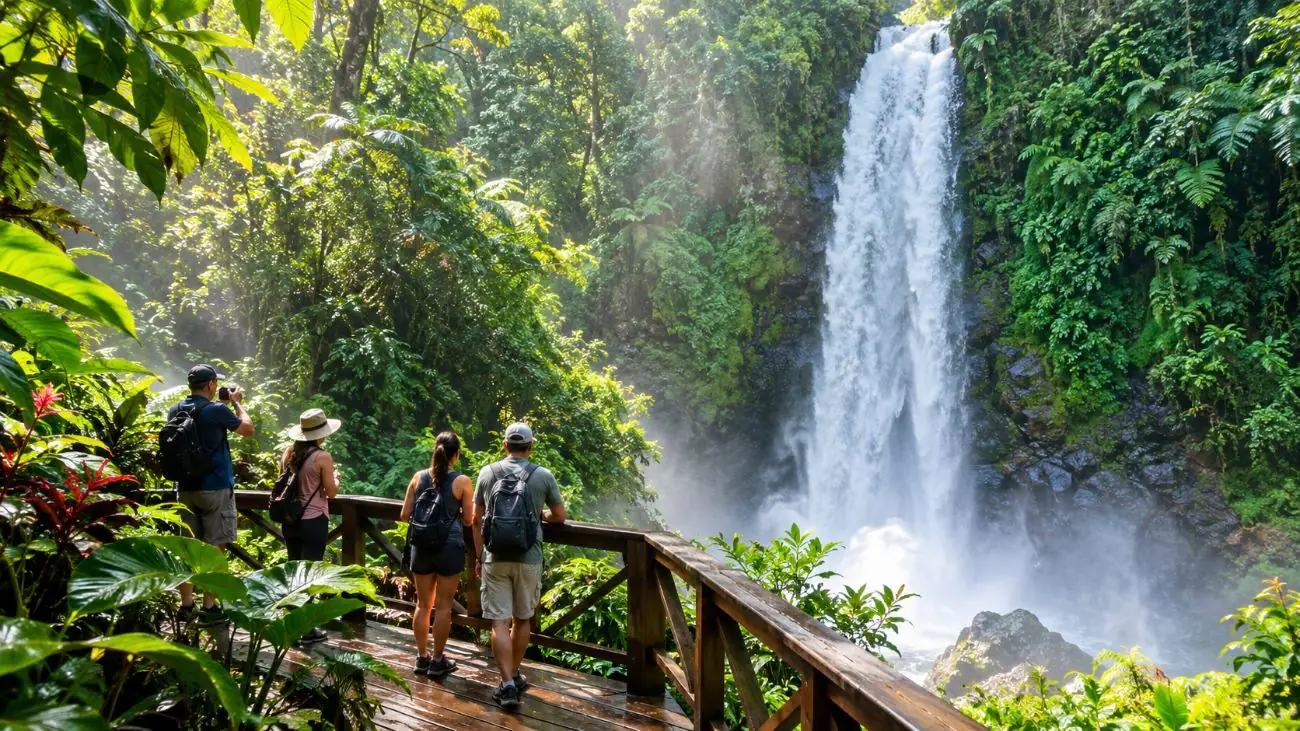
Poás in a day from San José: the crater, La Paz Waterfall and a coffee farm lunch, with the park ticket included.
Check dates for the volcano, waterfall and coffee day tripWhat do you see at Irazú?
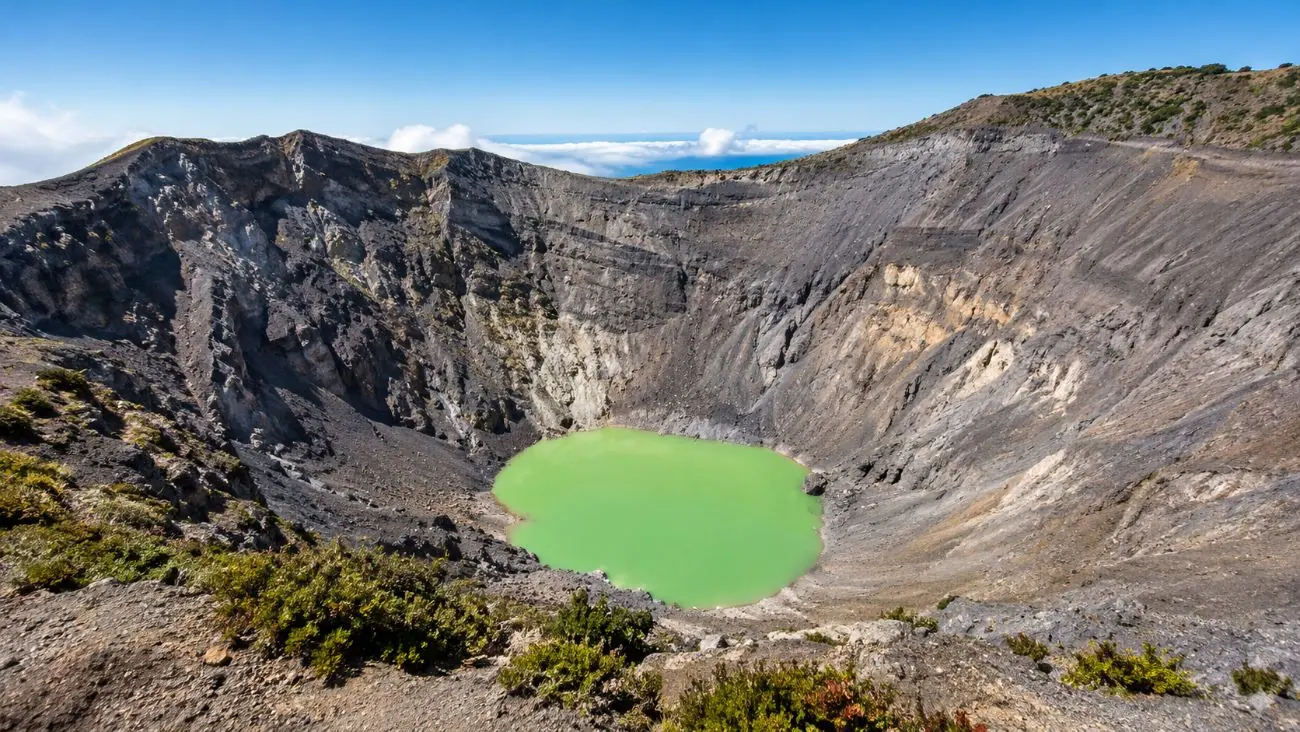
A wide, bare summit of grey ash and rock, a deep main crater that at times holds a small green pool, and on clear mornings the view to both coasts.
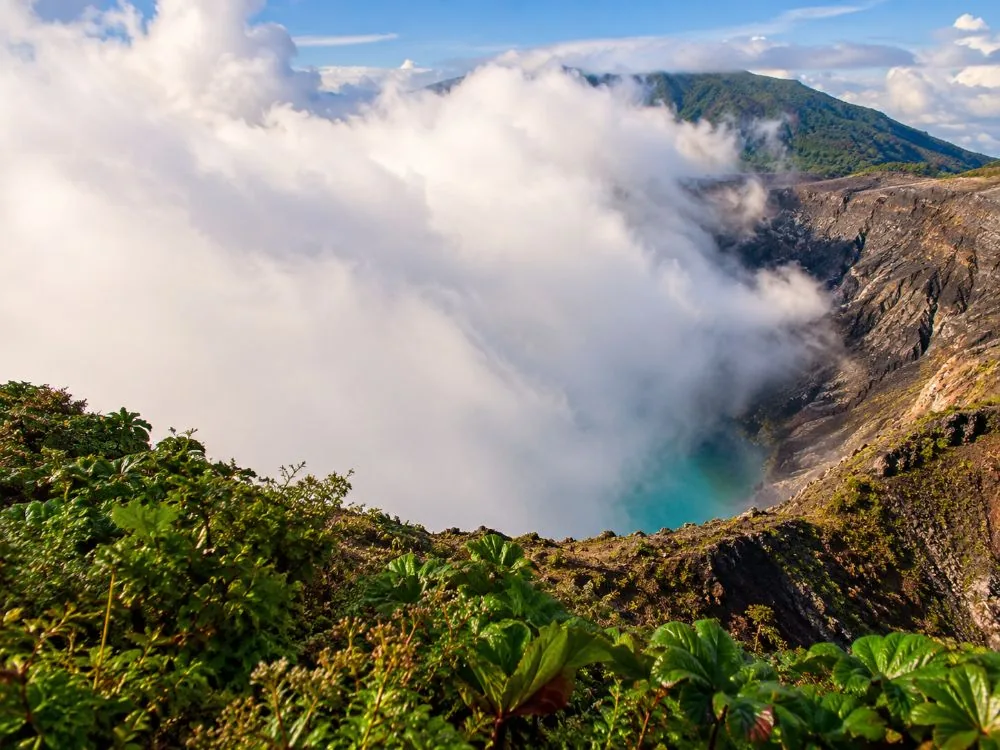
The colour of Irazú's crater lake comes and goes with the rain and the years, so don't plan the trip around it. What is always there is the landscape: almost no vegetation, wide craters side by side, and cold wind at 3,400 metres. The view of the Caribbean and the Pacific at once is real, but rare; the summit is usually in cloud.
Irazú's last big eruption, in 1963-65, dropped ash on San José for months. Today it is quiet compared with Poás, which is why there is no 20-minute rule at the rim.
How much is Irazú in 2026, and do you need to book?
Foreign adults pay US$16.95 and children 2 to 12 US$5.65. Book a slot online through SINAC, as at Poás.
Irazú's crater sector runs on hourly slots from 8 a.m., about 150 people each, and Costa Rica's tourism board gives its hours as 8 a.m. to 3:30 p.m. every day (ICT; slot details from Two Weeks in Costa Rica, Vamos Rent-a-Car). Two Weeks in Costa Rica reports that the ranger station stopped selling tickets in 2024. Vamos, in March 2026, says the gate takes payment. Don't test it on a weekend: book on SINAC and bring the passport you booked with.
Parking at Irazú was about 1,100 colones in 2025. Like Poás, SINAC doesn't refund for weather.
Which is easier to get to?
Poás, if you are staying near the airport, in Alajuela or Heredia, or heading north to Arenal. Irazú, if you are in Cartago or the Orosi Valley.
Poás is about 1 hour from Juan Santamaría airport through Alajuela. Irazú sits on the other side of San José, above Cartago, so from the airport you cross the city first. Irazú pairs well with the Orosi Valley, Lankester Botanical Garden and Cartago's basilica; Poás with La Paz Waterfall and coffee farms. Neither needs a 4x4. Getting to Poás has the route.
Can you do Poás and Irazú in one day?
Possible, but you would reach one of them in late morning cloud. Two separate mornings are a better plan.
The two parks sit on opposite sides of the Central Valley, about two hours apart in traffic. Do one at 8 a.m. and you reach the second around 11, the worst hour for cloud. If you only have one morning, pick one volcano and give it the early slot.
What is the best volcano to see in Costa Rica?
For a crater view without a hike, Poás. For height, Irazú. For a classic cone and hot springs, Arenal. For mud pots and fumaroles on a jungle hike, Rincón de la Vieja.
The five that visitors ask about most:
| Volcano | What you see | Can you see the crater? | Best for |
|---|---|---|---|
| Poás | Acid lake, vents, gas plume | Yes, from a viewpoint, 20 minutes | First-timers, short trips |
| Irazú | Grey craters, view to both coasts on rare days | Yes, from rim paths | Height, wide landscape |
| Arenal | A near-perfect cone, old lava fields | No; the summit is off limits | Hiking, hot springs, La Fortuna |
| Rincón de la Vieja | Bubbling mud pots, fumaroles, waterfalls | No; the summit trail is closed | Guanacaste, active hikers |
| Turrialba | A steaming crater on a guided visit | On guided visits, when open | Volcano fans, quiet days |
Arenal's lava flows stopped in 2010, so no Costa Rican volcano shows lava today. Rincón de la Vieja erupted dozens of times in July and August 2026 (Tico Times), and Turrialba reopened on 26 August 2026 after a week closed for heavy rain (Tico Times). More in Costa Rica's volcanoes in 2026.
Which should you pick?
Poás for one morning near San José. Irazú if Poás is closed, if you are staying east of the city, or if you want to walk.
- First visit, short stay: Poás, with an early slot.
- Landing or leaving via SJO: Poás, an hour away.
- Staying in Cartago or Orosi: Irazú.
- Want to walk more than 20 minutes at the top: Irazú.
- Want the volcano plus a waterfall and coffee: Poás, with La Paz and a farm. The Poás and La Paz tours guide sorts out which day.
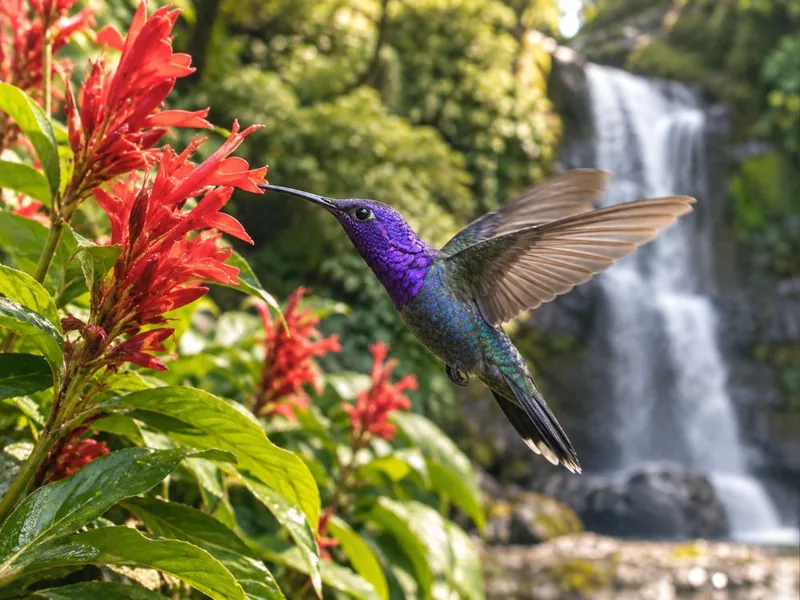
The Poás crater, a coffee plantation and the full La Paz Waterfall Gardens with a buffet lunch, all entrance fees included.
Explore the Waterfall Gardens tour Tour detailsFrequently asked questions
Is Irazú higher than Poás?
Yes. Irazú is 3,432 metres, the highest volcano in Costa Rica. Poás is about 2,700 metres.
Is Irazú or Poás more active?
Poás. It erupted in 2025 and again on 27 August 2026 and stays at alert level 2 of 4. Irazú's last big eruption was in 1963-65.
Do Poás and Irazú cost the same?
Yes, US$16.95 for foreign adults on SINAC, and US$5.65 for children 2 to 12. Parking is extra at both.
Can you see lava at either volcano?
No. Poás has an acid lake and gas, Irazú bare craters. No Costa Rican volcano has shown flowing lava since Arenal's eruptive phase ended in 2010.
Ready to book
Choose your tour
Free cancellation up to 24 hours before on most options. Prices are from-prices in USD and move with the season.
Poás Volcano, Waterfall & Coffee Farm Day Trip
- Hotel pickup and drop-off in San José
- Live guide in English and Spanish
- Poás Volcano National Park entry fee

Private Poás Volcano & La Paz Waterfall
- Private guide and electric vehicle, 2 to 4 people
- Hotel pickup within the Central Valley (GAM)
- Park entrance and parking fees
Poás Volcano, Coffee Plantation & La Paz Waterfall Gardens
The full gardens with a buffet lunch, not just a roadside look